
Azienda Agricola Faraone, Abruzzo, Italy
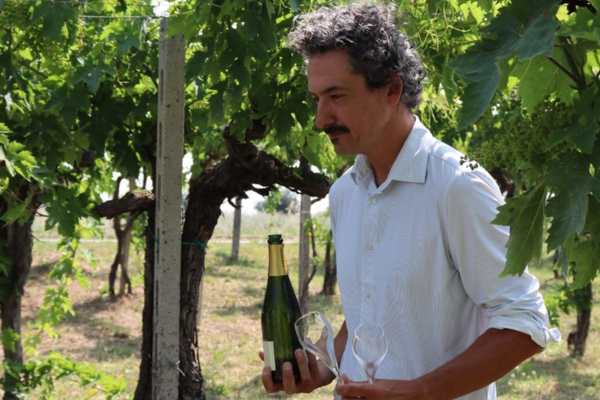
Federico Faraone in one of the family’s Montepulciano vineyards planted in 1982

Between the Adriatic coast and the hills of central Italy, Azienda Agricola Faraone has built its identity around the preservation of old vineyards and the protection of a distinctly territorial expression of Montepulciano. The estate farms 14 hectares, of which 12 are under vine, producing approximately 60,000 bottles annually from native varieties including Passerina, Pecorino and Montepulciano. Yet the heart of the winery lies in just three hectares of old vines — historic pergola-trained vineyards that continue to shape the estate’s philosophy and future.
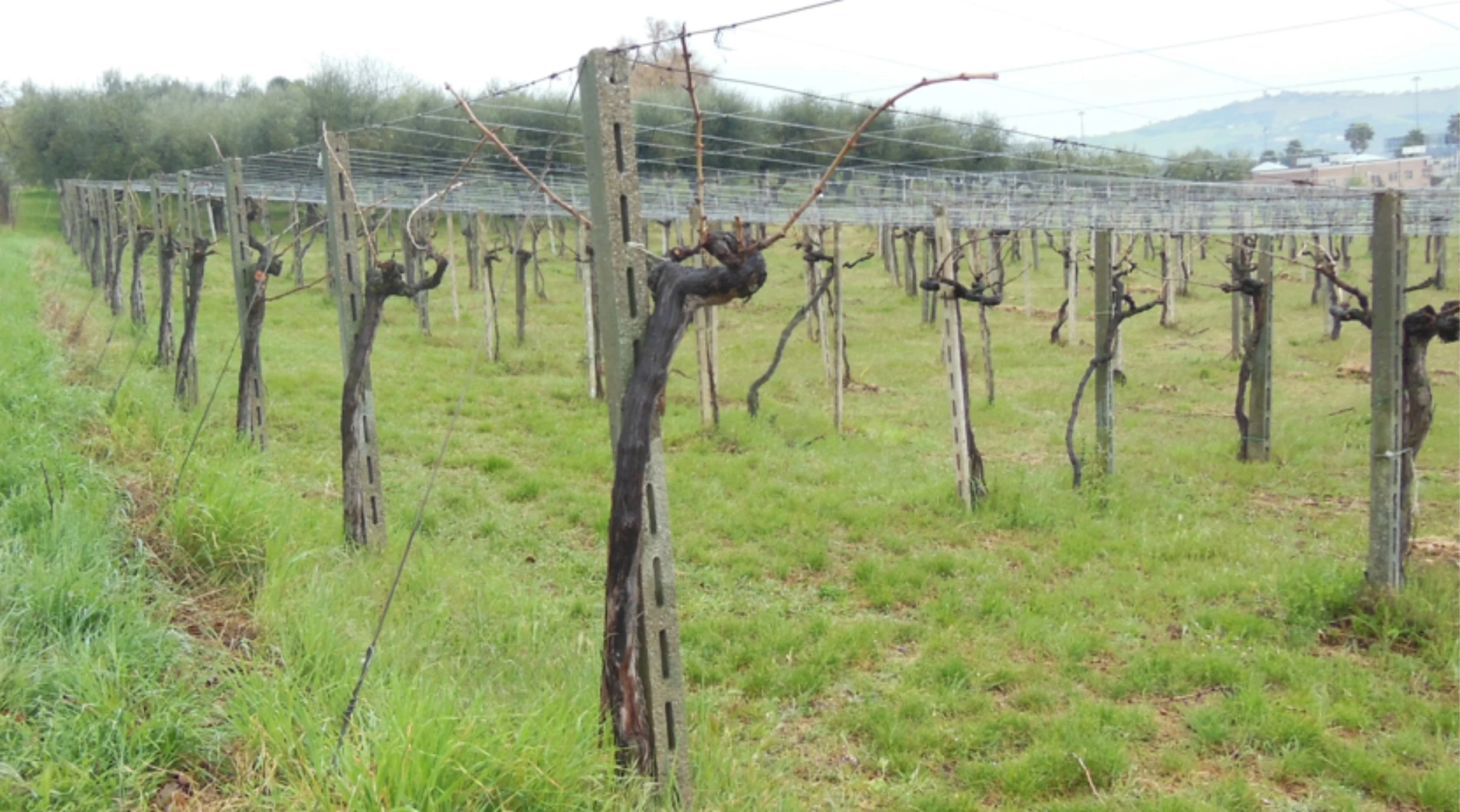
The historic Rovano vineyard, planted with Montepulciano in 1962, using the traditional pergola abruzzese system
The historic parcels, Rovano and Pediconi, are planted exclusively to Montepulciano using the traditional pergola abruzzese system. Some vines date back to 1962, while others were planted during the 1980s, making them among the oldest surviving vineyards in the area. Originally established for high yields, these old tendone vineyards have been gradually restored and radically rebalanced through careful pruning and vineyard management to produce far lower quantities of fruit with significantly greater concentration and character.
Today these vineyards give life to two of the estate’s most representative wines: Cerasuolo d’Abruzzo and Colline Teramane Montepulciano d’Abruzzo DOCG, accounting for roughly half of the winery’s annual production. The old Montepulciano clones found in these vineyards are considered especially valuable because they belong to the historic genetic heritage of the Teramo area — naturally low-yielding selections that ripen late, often harvested in October, producing wines with greater elegance, fresher acidity and finer balance than many modern, more productive clones.
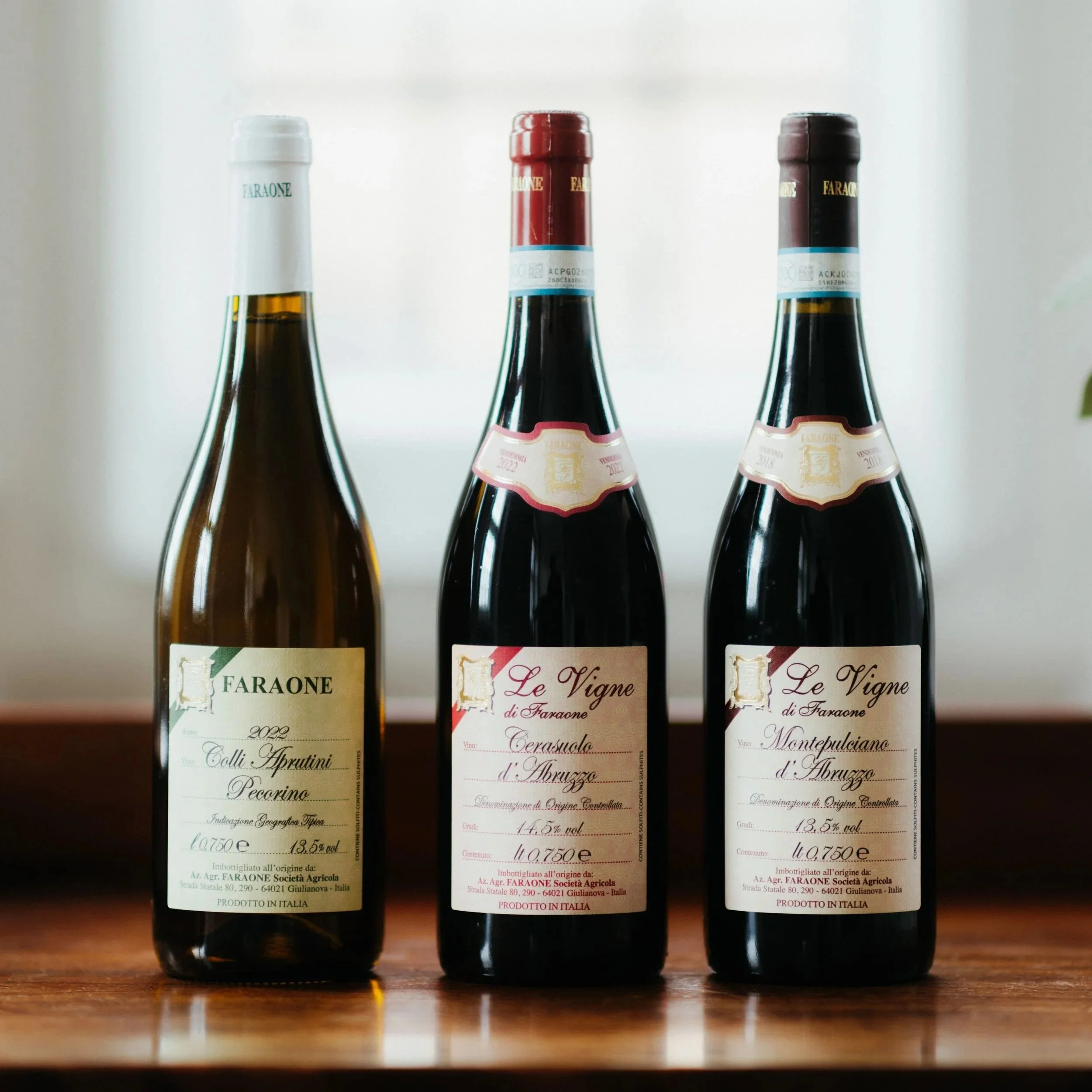
The winery’s Cerasuolo d’Abruzzo is made from old Montepulciano clones
The vineyards grow on clay-rich soils that contribute depth, structure and natural acidity to the wines, while the age of the vines ensures remarkable vegetative balance and resilience. Deep root systems allow the plants to regulate themselves even during dry vintages, reducing stress and maintaining consistency in increasingly unpredictable climatic conditions. For the Faraone family, these old vineyards are not only an agricultural resource but an essential patrimony to be protected.
The winery actively seeks out abandoned or neglected vineyards over 35 years old, often taking them under management rather than allowing them to be uprooted. Many of these parcels remain emotionally tied to local families who no longer have the time to cultivate them but cannot bear to see them disappear. In this sense, Faraone’s work is also an act of cultural preservation — safeguarding fragments of a rural civilisation in which nearly every farmhouse once maintained a small vineyard.
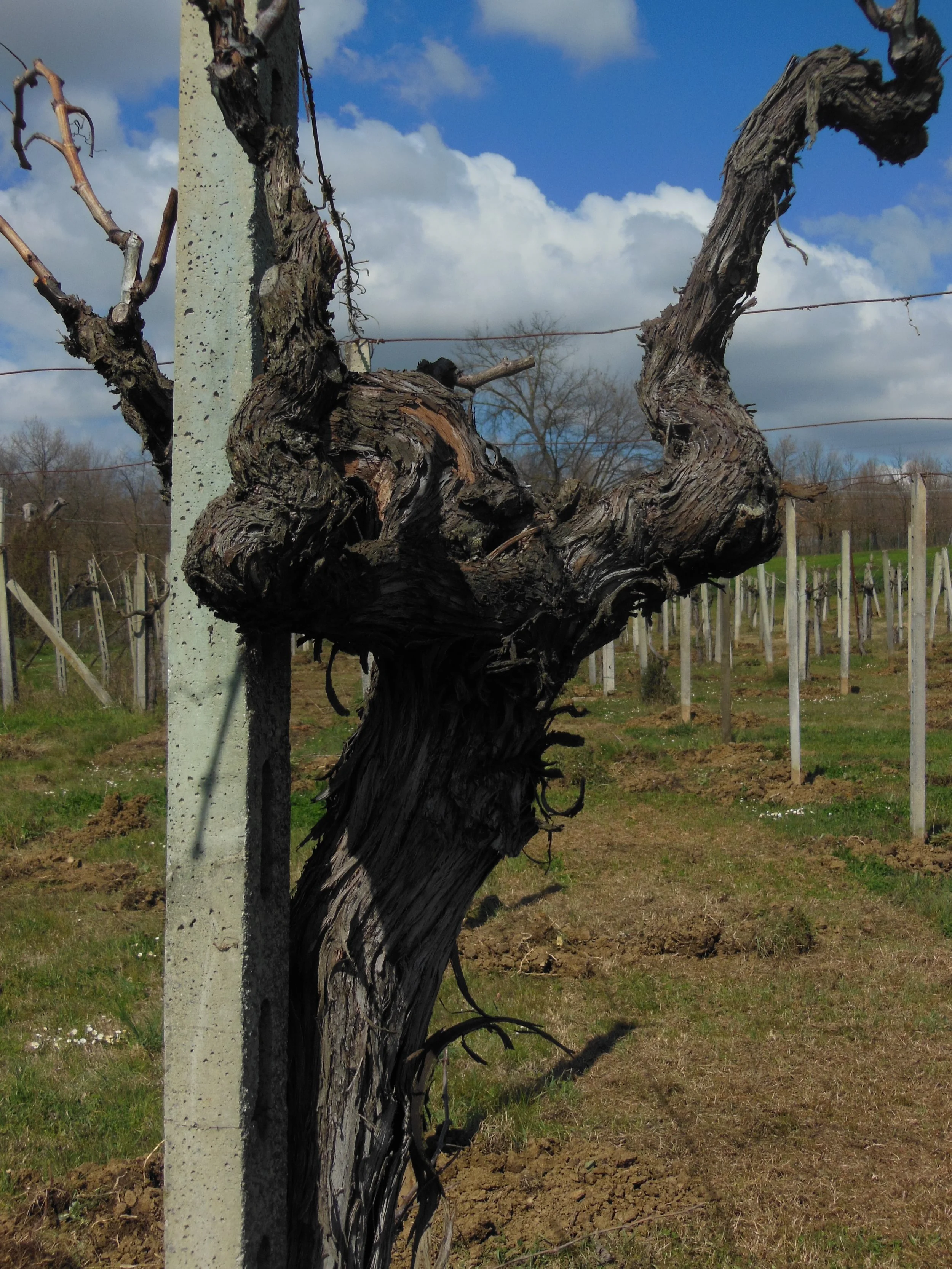
The winery places importance on preserving the historic Montepulciano clone of the area
Particular importance is placed on preserving the historic Montepulciano clone of the Teramano area at a time when many newer clones dominate modern viticulture. Missing vines are replaced individually, often with ungrafted vines, allowing the continuity and genetic integrity of the vineyards to remain intact.
The estate’s philosophy is deeply rooted in authenticity rather than internationalisation. Rather than pursuing fashionable grape varieties, Faraone remains committed to native cultivars and traditional vineyard material capable of producing wines with lower alcohol, greater drinkability and stronger territorial identity — qualities increasingly sought after today.
As Federico Faraone reflects: “Understanding and working with old vineyards also means understanding the origins of Abruzzo’s wines. These vines are living witnesses to our history, our rural culture and the authentic identity of our territory.”
Website: faraonevini.it
Instagram: @faraonevini
Facebook: Faraonevini
Photos supplied by winery