
Vigna delle Sanzioni, DOC Valdarno di Sopra, TUSCANY, Italy
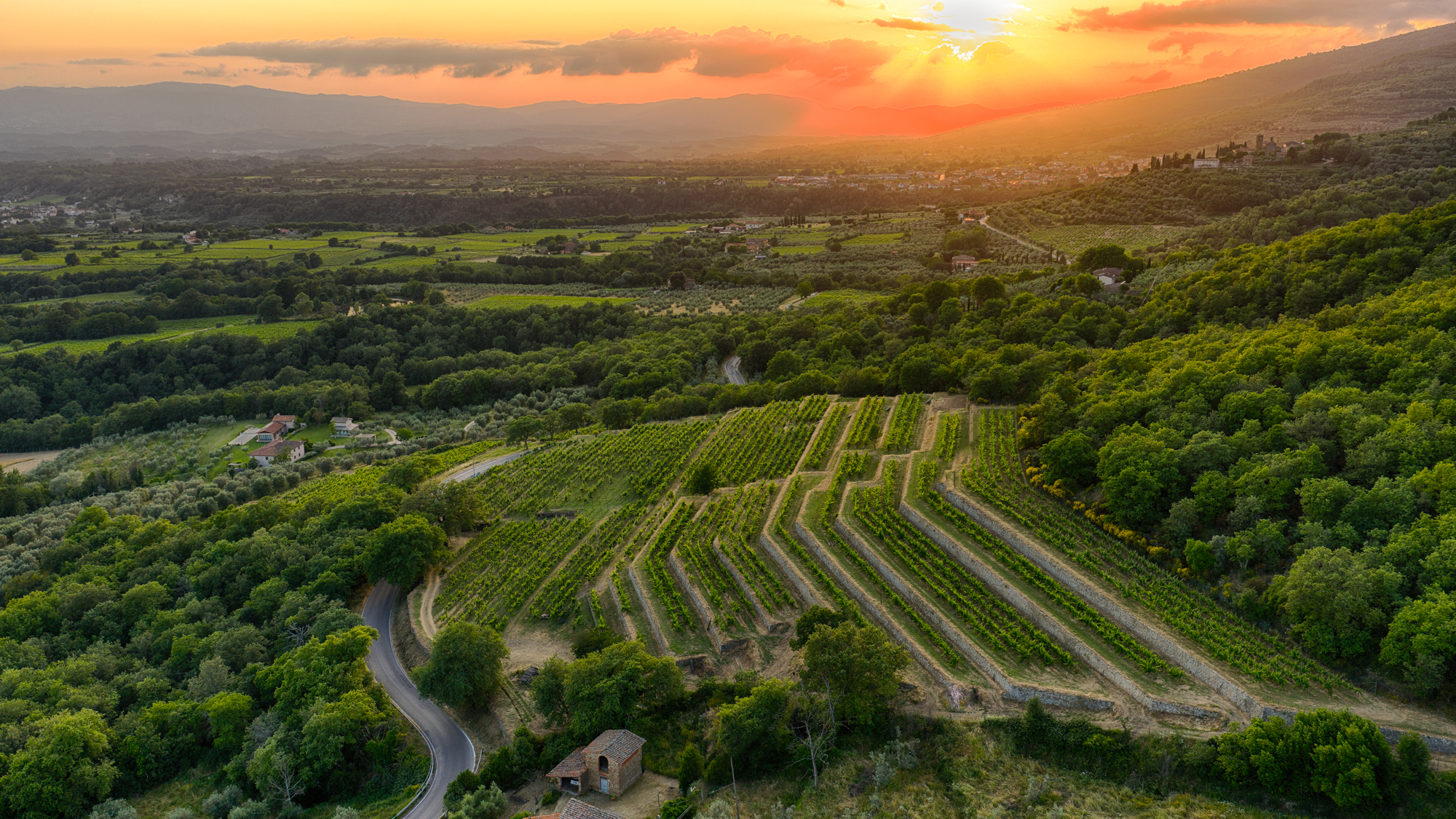
The geometrically designed terraces of Vigna delle Sanzioni, Tuscany, established in 1936
Set along the ancient Setteponti road above Loro Ciuffenna, in the Valdarno di Sopra DOC of Tuscany, the Vigna delle Sanzioni is one of Italy’s most paradoxical vineyards: conceived as propaganda, preserved as heritage, and today reimagined as a living, working estate.
Its creation dates to 1936, in the wake of the international sanctions imposed on Italy by the League of Nations following the Ethiopian campaign. The regime’s response was to promote autarky—self-sufficiency—as both policy and propaganda. The vineyard became a physical manifesto of that idea, carved into the hillside with geometric precision not simply to grow grapes, but to project resilience and national pride.
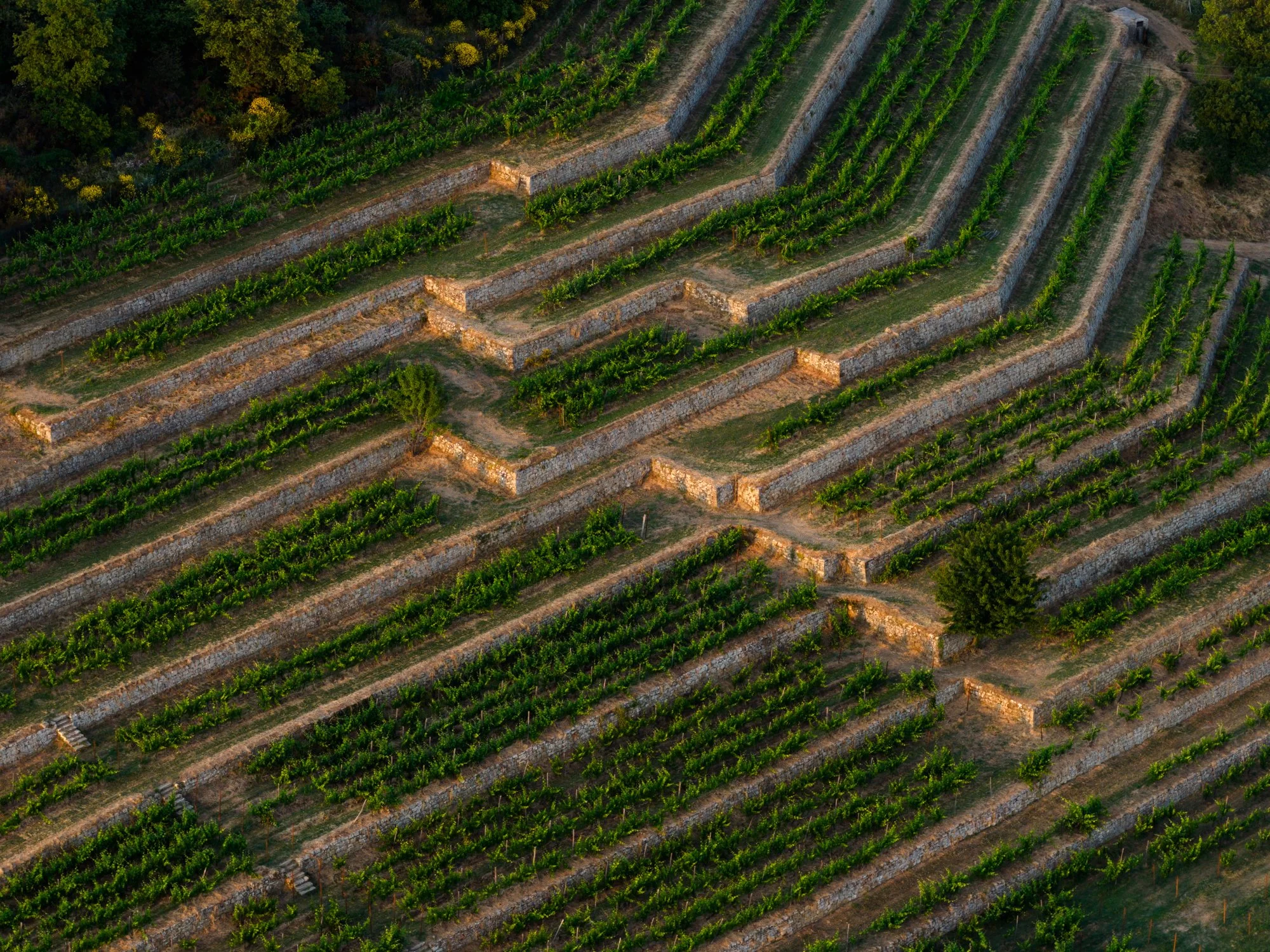
The geometric precision of the terraces was designed to create national pride
The design bears the imprint of the monumental aesthetic associated with Marcello Piacentini, a central figure behind the planning of Rome’s EUR district. Here, that language is translated into a rural setting: terraces rise in strict geometric order, supported by dry-stone walls and articulated by axial staircases. Built entirely by hand, the vineyard transforms a steep hillside into a structured, almost theatrical landscape. The overt fascist symbols once embedded in the stonework have since been removed, yet the site still carries the imprint of its ideological origins.
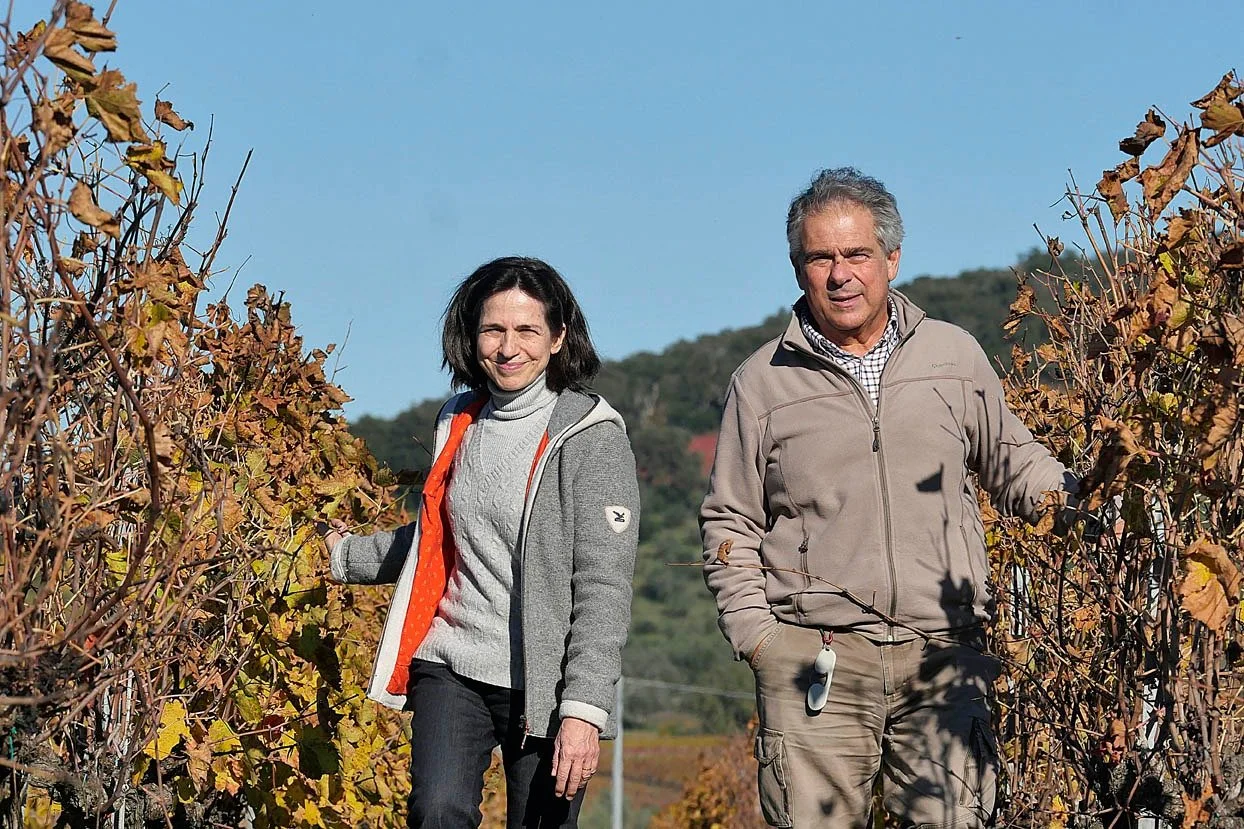
Siblings Paola and Gian Domenico Gigante acquired the estate in 2022
What defines the site today is continuation—and a personal vision. The vineyard was acquired in 2022 by siblings Paola and Gian Domenico Gigante, for whom its revival represents a genuine “dream come true.” Their approach is one of custodianship: respecting the fragility of the site while restoring it to production. Extending over three hectares and now organically certified, the vineyard yields around 5,000 bottles annually, reinforcing its identity as a site-driven, heritage-focused project.
A defining element of the vineyard is its extraordinary continuity of old vine material, with some plants still tracing their lineage back to the original 1936 plantings. These surviving vines are not only rare living witnesses of pre-war viticulture, but also the genetic and cultural backbone of the site, continuously shaping its identity through selection and re-propagation.
The vineyard is renewed not through replanting, but through propagation. The aim is continuity, not replacement. Instead of nursery clones, vines are perpetuated through massal selection, with cuttings taken from the best-performing old plants and replanted in situ. This allows for gradual turnover—individual vines replaced as they decline—creating a vineyard that effectively self-propagates across generations.
This continuity operates on three levels: spatial continuity (the same terraces and exposures), genetic continuity (the same vine lineage via massal selection), and epigenetic continuity. In plants, Epigenetics describes changes in gene expression shaped by environment and partially inherited. Decades of heat, wind and water stress may induce stable modifications, meaning new vines can carry forward a form of environmental memory. Terroir, in this sense, becomes embodied.
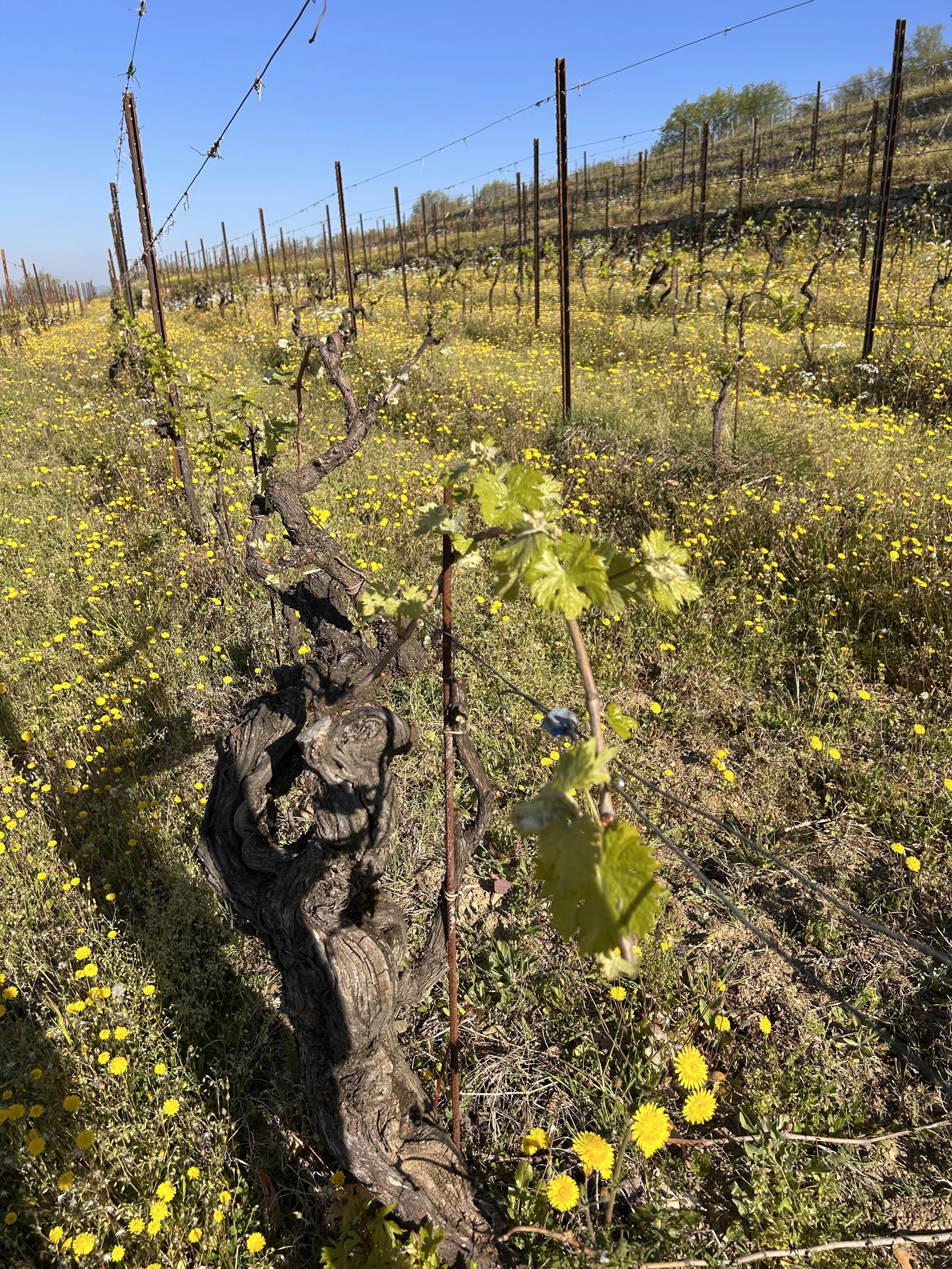
Some of the old vines can trace their lineage back to the original 1936 plantings
The vineyard’s plant material reflects this layered history. Alongside Sangiovese, Canaiolo and Trebbiano, rare local varieties persist, forming a complex field blend. The wines today balance this heritage with structure: a Sangiovese Riserva (around 90% Sangiovese with Canaiolo and Grand Noir de la Calmette) and a Trebbiano Riserva with small additions of Malvasia Bianca and San Colombano.
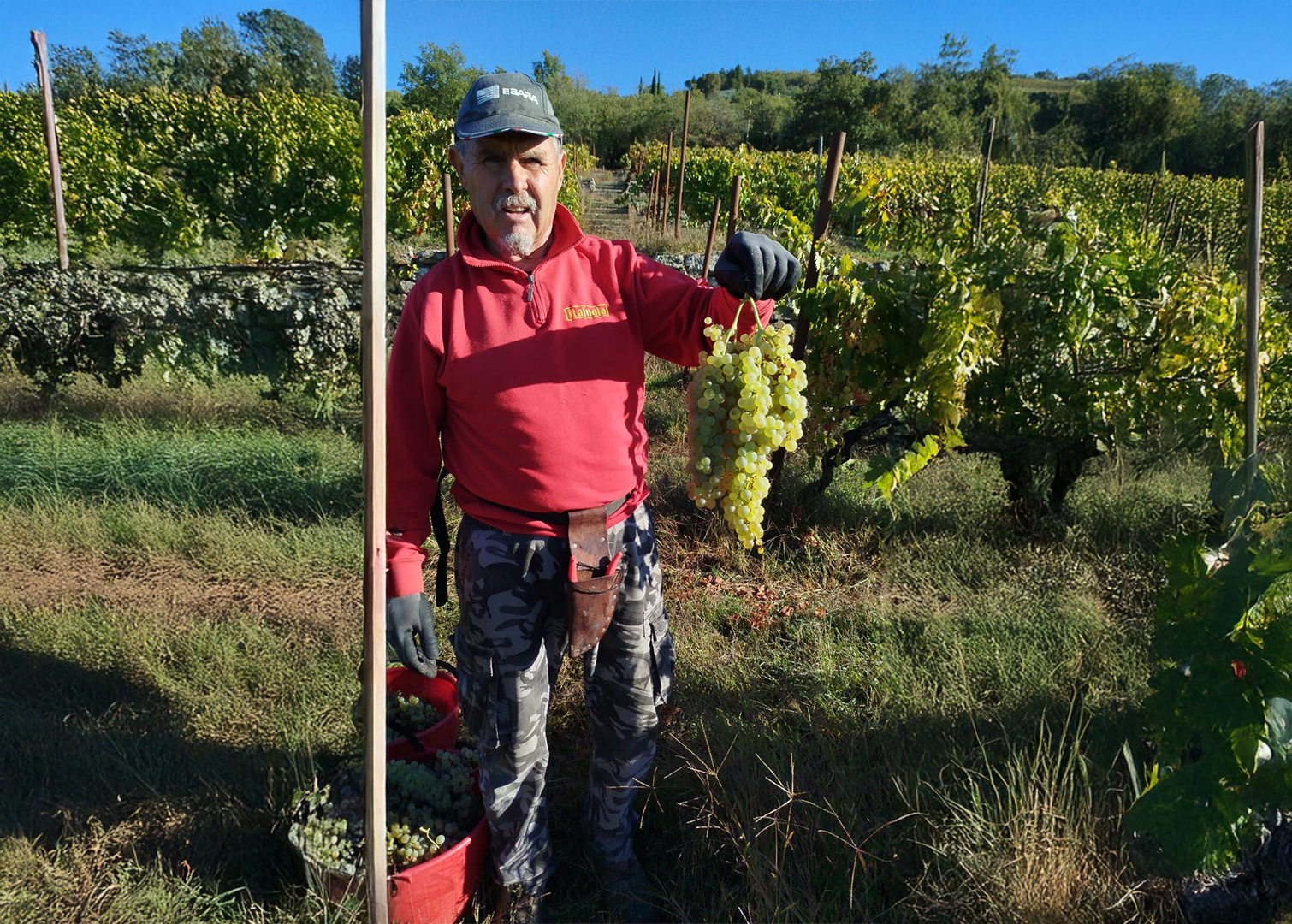
A variety of native varieties are grown on the estate, including white varieties Trebbiano, Malvasia Bianco and San Colombano, alongside Sangiovese and other reds.
Not without vulnerability—a fire in 2021 and the constant need to maintain terraces—the vineyard remains a living monument. Its power lies in its tension: between ideological origin and modern reinterpretation, between biodiversity and selective winemaking. Here, history is not simply preserved, but continuously renewed, vine by vine.
Instagram: @vignadellesanzioni
Website: vignadellesanzioni.it