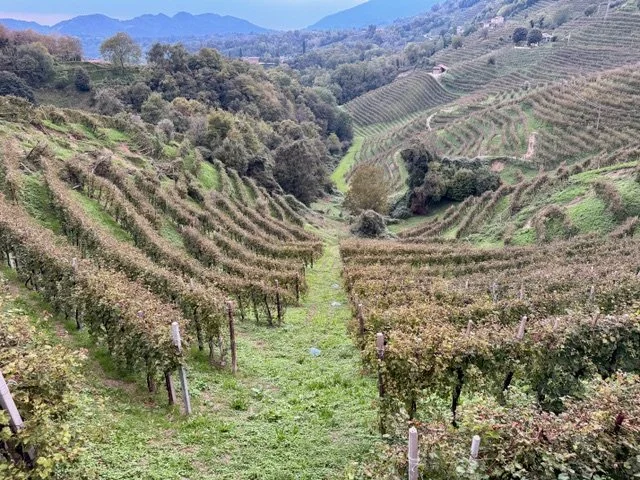
The hills of Conegliano Valdobbiadene Prosecco have been inscribed as a UNESCO World Heritage cultural landscape. Image supplied by Michèle Shah.
e.
In the undulating mosaic of northeastern Veneto, few landscapes articulate the meaning of heroic viticulture as convincingly as Conegliano Valdobbiadene Prosecco DOCG. This is heroism defined not by romance but by measurable constraint: slopes routinely exceeding 30 percent and, in their most dramatic sectors, rising far steeper; vineyards climbing from approximately 100 to nearly 500 metres above sea level; terraces engineered to prevent erosion; and a production model in which mechanisation remains excluded.
In 2019, these hills were inscribed as a UNESCO World Heritage cultural landscape. The recognition acknowledged not simply aesthetic harmony, but a thousand-year continuum of adaptation between morphology and cultivation. Here, the land dictates form — and human intervention has become part of the terrain’s architecture.
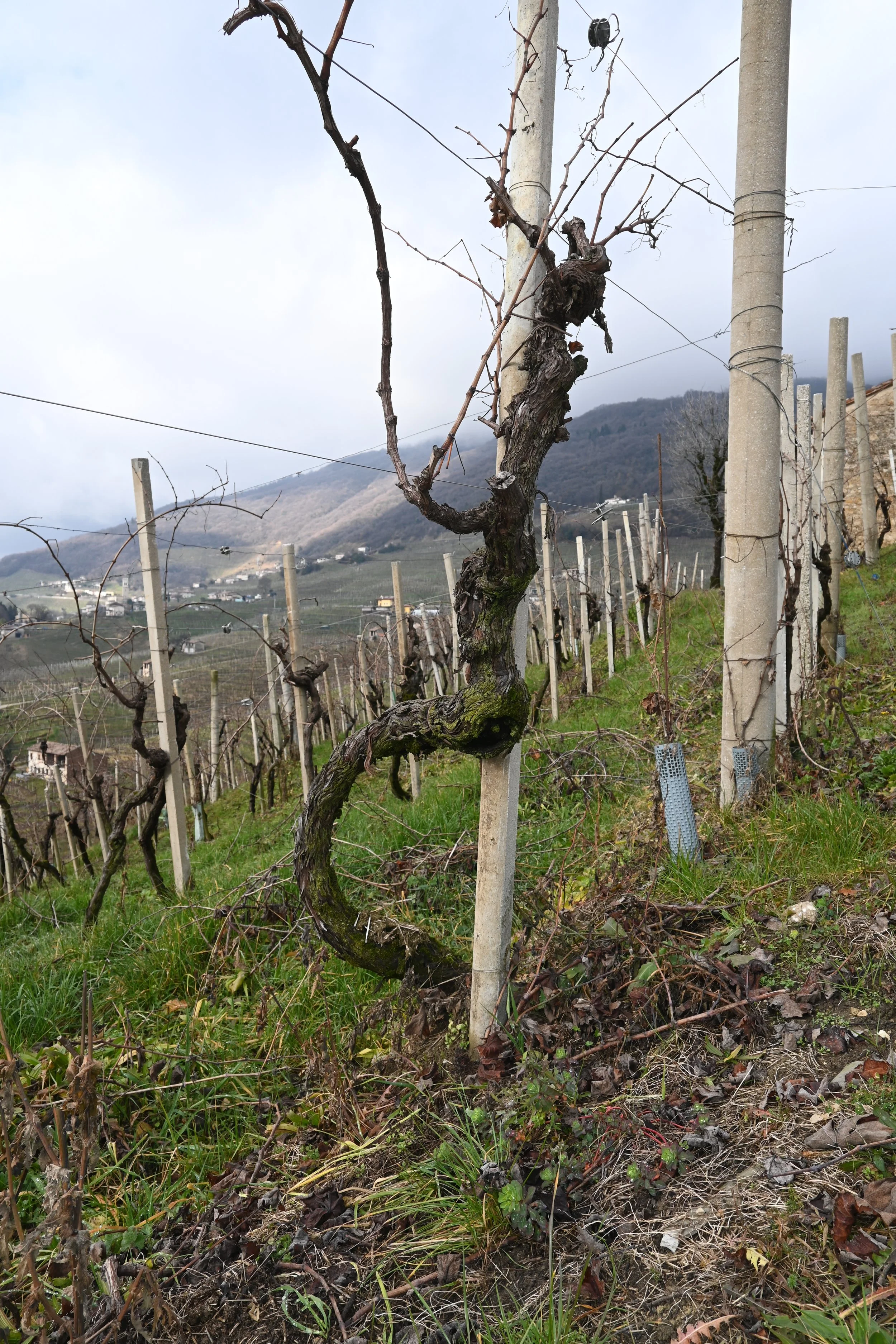
Old vines planted on slopes at Azienda vitivinicola Ronce. Photo supplied by Consorzio Tutela Conegliano Valdobbiadene Prosecco.
Steep Slopes: Where Morphology Shapes Design
The hills between Conegliano and Valdobbiadene are structured in a distinctive hogback formation — long, narrow ridges with steep, asymmetric flanks created by the uplift and erosion of sedimentary layers. This geomorphology produces dramatic inclines, many well above 30 percent, with certain vineyard faces approaching extreme gradients that render mechanised work impractical.
The hogback structure does more than intensify slope; it determines landscape design. Vineyards follow the natural curvature of the ridgelines, creating parallel contours that visually define the territory. The narrow crests and plunging sides leave little room for broad mechanised blocks. Instead, cultivation adapts to the morphological spine of each hill.
Steepness extracts effort, but it also refines viticulture. Rapid drainage is essential in a zone where annual rainfall ranges between roughly 1,000 and 1,300 millimetres. Air circulates freely along exposed ridges, reducing humidity pressure. South and south-west exposures maximise solar interception, enabling Glera to reach complete maturity while retaining the acidity required for structural balance in sparkling production.
The slope disciplines both vine and grower. It filters out excess. It demands precision.
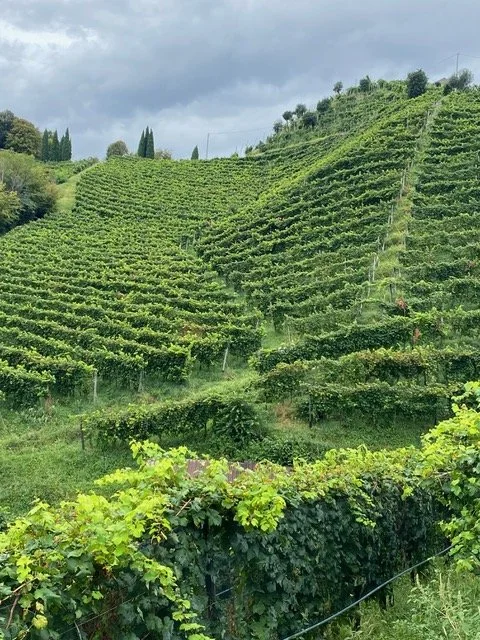
The terraced slopes of Conegliano Valdobbiadene Prosecco. Image supplied by Michèle Shah.
Soils: Conglomerate and Complexity
Beneath the vineyards lies a mosaic of 9 different soils shaped by ancient marine sedimentation and glacial activity. Among the most distinctive components are conglomerate formations — compacted mixtures of pebbles, sand and calcareous material bound within sedimentary matrix.
Conglomerate soils offer excellent drainage, particularly critical on steep gradients. Their stony composition moderates vine vigour and encourages deeper root penetration, contributing to balanced growth and structural finesse in the fruit. Another extremely defining factor in the aromatic composition is the morainic soil that occupies an ancient glacial area. The stony richness of this soil reduces its water-holding capacity, positively impacting ripe fruit and exotic nuances. In contrast, the deep red clay soil of the Feletti area makes the wine rounder and more structured, where spicy and Mediterranean notes express the character of the soil. Consumers and wine tourists are invited to discover the other six soil–wine relationships for themselves.
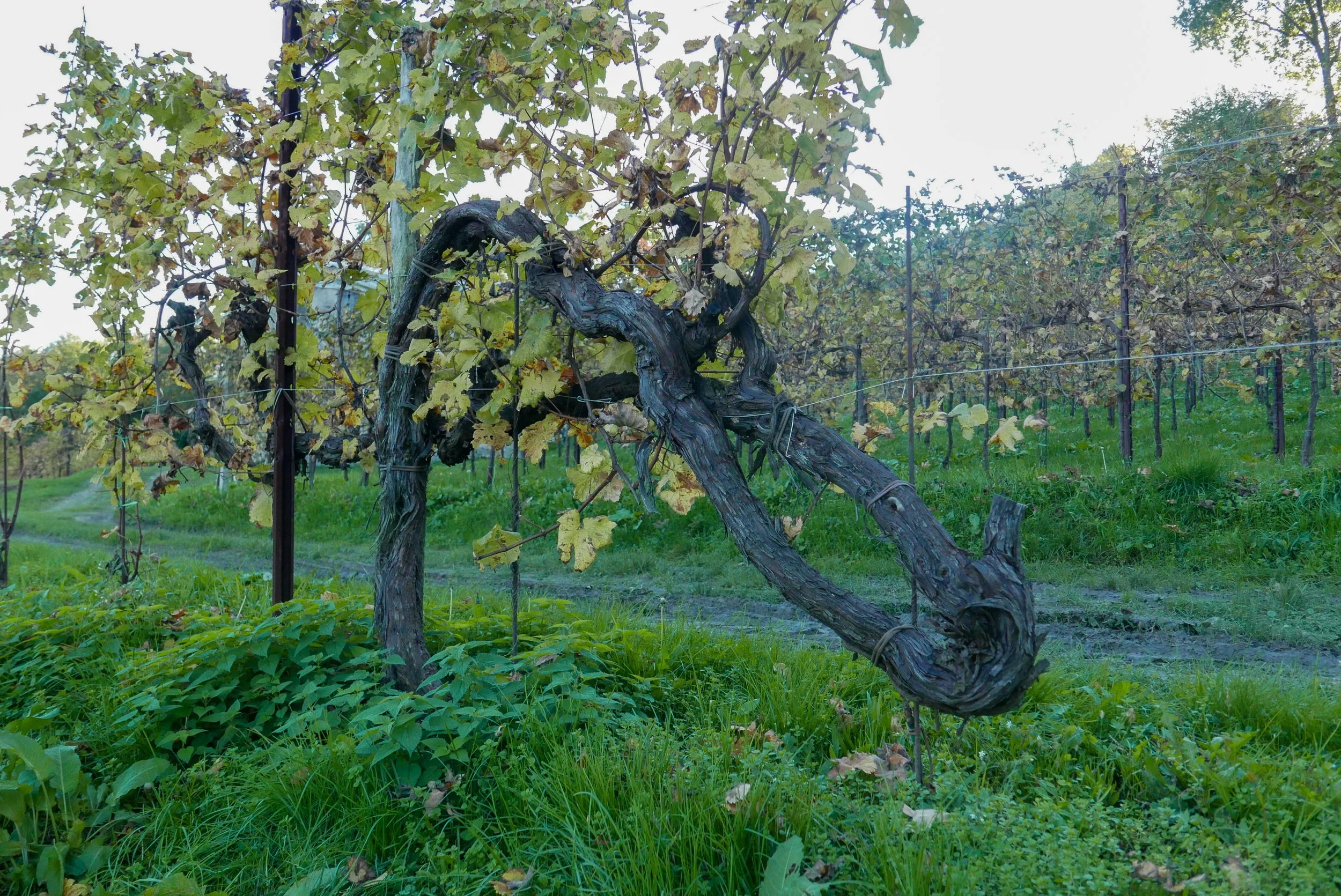
Old vines in Vigna La Castella, Rua di Feletto. Photo supplied by Consorzio Tutela Conegliano Valdobbiadene Prosecco.
Old Vines: Continuity, Selection and Living Heritage
In Conegliano Valdobbiadene, old vines are not formally codified, but recognised through continuity — the result of long-term adaptation to steep gradients, marginal soils and finely tuned microclimates. Many parcels, particularly within the Rive, retain historic vines handed down through generations, often trained according to traditional systems such as cappuccina, with some reaching truly venerable, even centenary status. Over time, these vines naturally regulate their vigour, producing lower yields of greater concentration while maintaining balance. Their deeper, more established root systems engage with the soil profile in a more complex and selective way, reinforcing site expression and buffering climatic variability. Just as significant is their genetic diversity: epigenetic analysis demonstrated that the vines exhibit increased adaptability to environmental conditions and reduced susceptibility to diseases. Furthermore, older vineyards frequently preserve a mix of historic Glera biotypes and minor local varieties, contributing layers of complexity that extend beyond modern clonal selection. Within a fragmented landscape, old vines operate as both qualitative resources and cultural memory — anchoring viticulture in a long-term relationship between plant, place and human stewardship.
Altitude: Elevation as Precision
From 100 to nearly 500 metres above sea level, altitude generates distinct mesoclimatic bands. Average annual temperatures sit around 12–13°C, yet upper slopes benefit from wider diurnal variation, preserving malic acidity and sharpening aromatic articulation.
Cool air descends from the Prealps; Adriatic influence tempers excess heat. The equilibrium is subtle: warmth sufficient for ripening, nocturnal cooling sufficient for tension. Harvest timing reflects this vertical differentiation, particularly within the 43 officially recognised Rive, where hand harvest and vintage declaration are mandatory.
Elevation here is not scenic enhancement. It is compositional control.
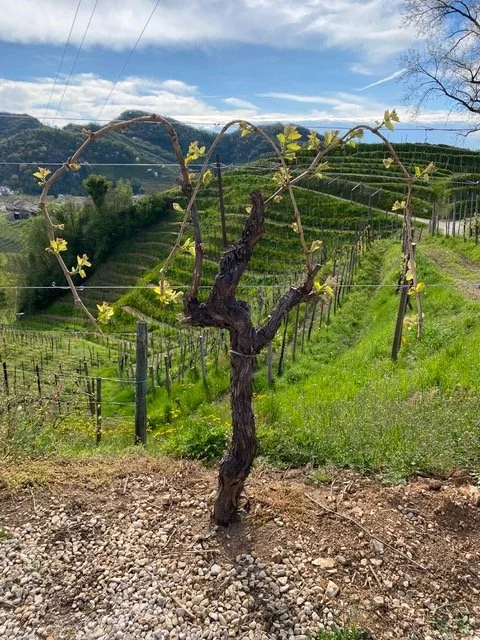
High altitude vineyards growing grapes for Conegliano Valdobbiadene Prosecco. Image supplied by Michèle Shah.
Fragmentation and the Rive: Codifying Micro-Territory
Ownership remains profoundly fragmented, with thousands of growers tending small, family-held parcels shaped by inheritance and terrain. Consolidation is constrained by both geography and tradition.
The Rive system formalises micro-variability across 43 delimited areas. Differences in soil, slope orientation and microclimate are not abstract notions but regulatory distinctions. Stricter yield parameters and mandatory manual harvest reinforce qualitative intent.
Fragmentation complicates scale, but it preserves nuance. The hills resist homogenisation; instead, they articulate difference.
Manual Labour: The Measured Cost of Steepness
In hillside sectors, vineyard labour can approach 800 hours per hectare annually, compared with roughly 200/250 hours in flatland contexts. Pruning, soil and canopy management and harvesting are predominantly manual operations, dictated by gradient and narrow terraces.
Manual harvest safeguards bunch integrity and makes a bunch selection — decisive in maintaining aromatic clarity for sparkling base wines. But labour also represents accumulated knowledge, a sort of precision viticulture ante litteram. The human presence is not symbolic. It is structural.
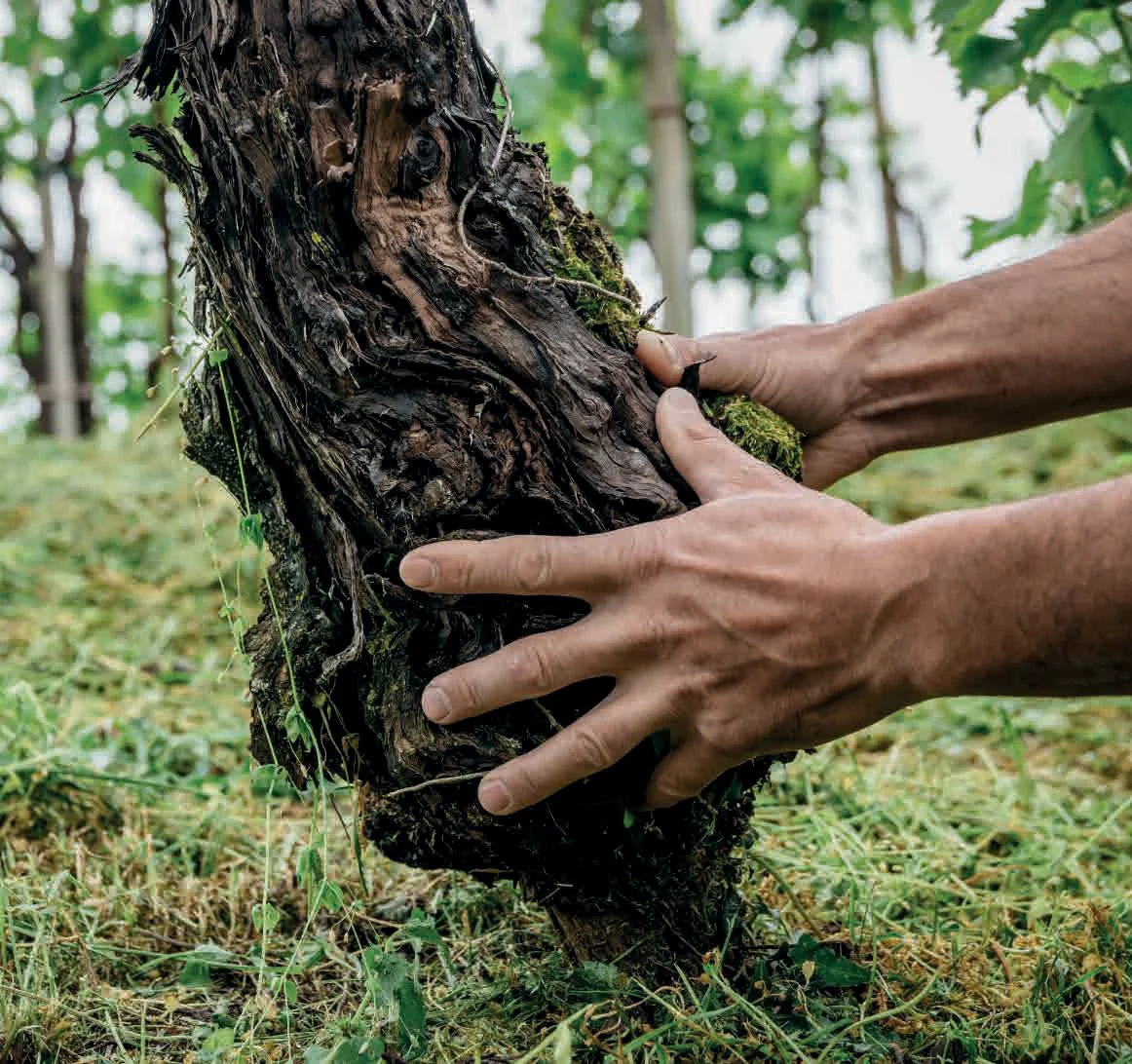
Most vineyard tasks can only be done by hand. Photo supplied by Consorzio Tutela Conegliano Valdobbiadene Prosecco.
Cultural Continuity and Stewardship
Viticulture has shaped these hills for centuries. The founding of the Conegliano School of Oenology in 1876 integrated scientific study with empirical tradition. DOC recognition followed in 1969; DOCG status in 2009 reinforced territorial hierarchy. The Consorzio di Tutela continues to coordinate regulatory oversight and sustainability initiatives.
Environmental stewardship is inseparable from slope management. Grass cover between rows stabilises soil; maintained ciglioni prevent runoff; woodland corridors preserve ecological balance.
Organic certification is steadily expanding across the denomination, and 52% of the vineyards have a sustainable certification (SQNPI), reflecting both regulatory encouragement and agronomic suitability in ventilated hillside sites. Biodiversity monitoring projects, including apiary initiatives where bees function as bioindicators of environmental health, reinforce the region’s commitment to ecological integrity. The presence of pollinators is not ornamental; it is diagnostic — evidence of reduced chemical impact and functioning ecosystems.
Climate variability — erratic rainfall, heat spikes, shifting phenology — intensifies the need for adaptive canopy management and soil health reinforcement. Projects such as VALORIVE explore soil solutions adapted specifically to steep Rive sectors (ie organic matter increase), integrating innovation without compromising landscape stability.
Sustainability here is not positioning. It is slope survival.
Conclusion: Architecture in Motion
The heroism of Conegliano Valdobbiadene rests in structure: gradients exceeding 30 percent, elevations approaching 500 metres, poor soils, hogback ridges dictating vineyard geometry, fragmented ownership, mandated manual harvest, labour inputs that far surpass lowland viticulture.
But beyond metrics lies equilibrium — a landscape continuously stabilised by human commitment.
The UNESCO inscription confirms the hills as a cultural construction sustained through work. The Rive classification codifies micro-territorial identity. Sustainability certification and biodiversity monitoring signal forward responsibility.
In these vineyards, geology sets the terms. Human persistence answers.
That dialogue — between rock, slope and hand — is the true architecture of heroic viticulture.
Facebook: @ConeglianoValdobbiadeneProseccoDocg
Instagram: @coneglianovaldobbiadenedocg
#ConeglianoValdobbiadene
#ProseccoSuperiore