
Old Vine Garnacha and the distinctive terroir of DO Campo de Borja
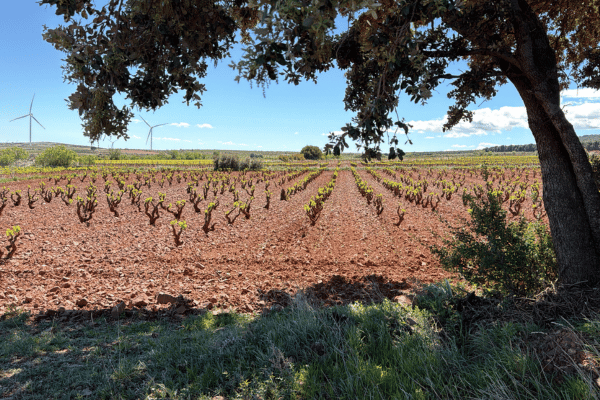
A 50-year old Garnacha vineyard in Fuendejalón, DO Campo de Borja, a source of top quality fruit for Bodegas Aragonesas
By Anna Harris-Noble, Regional Ambassador for Spain
DO Campo de Borja uses the strapline "Empire of Garnacha", not just because Garnacha makes up the majority of the grapes grown in the region, but also because the variety is thought to originate in the area. The grape's ubiquity in the DO Campo de Borja is closely linked to the establishment of the first Cistercian Monastery in Aragon, the Royal Monastery of Santa Maria de Veruela, which was founded in 1145. The Cistercian order was founded in Burgundy and winemaking was one of the key agricultural activities that the monks undertook, both for their own nourishment and to sell to generate funds. Vines feature on the 14th century columns in the cloister.

Grapes on columns in the cloister of the 12th-Century Cistercian Monastery of Santa Maria de Veruela
Today, there are around 3,300 hectares of Garnacha vines in the region - just over half of the total vineyard area - and 423 hectares are over 35 years of age. As yields are so low, as little as one bottle per vine, every year parcels are grubbed up to be replaced with almond trees or more productive young vines.
To try to protect the heritage parcels that remain, the DO Campo de Borja undertook two studies as part of their Historic Garnachas project to prove the value of old vine Garnacha. The Old Vine Conference organised a study trip to the region in April 2026 to find out more.
The new Garnachas Históricas certification
The first pillar of research, carried out by researchers at the Public University of Navarra, was a project aimed at establishing a scientific method of verifying the age of vines. This is important, as prior to the 1970s, the vineyard registers are often inaccurate, with parcels sometimes planted decades before they were officially registered. Professor Luis Gonzaga Santesteban and Mónica Galar Martínez have developed a method to verify their age accurately, which combines the analysis of historic aerial photographs, measurements of the height and growth between pruning cuts, as well as the identification of rootstocks.
The system that they have developed is now being used to certify the age of vineyards in the region. Clos de la Ros from Vinos del Viento is the first wine to be launched to bear "Garnacha Histórica." This new term certifies that the wine is a single varietal Garnacha from vines aged 35 years or more.
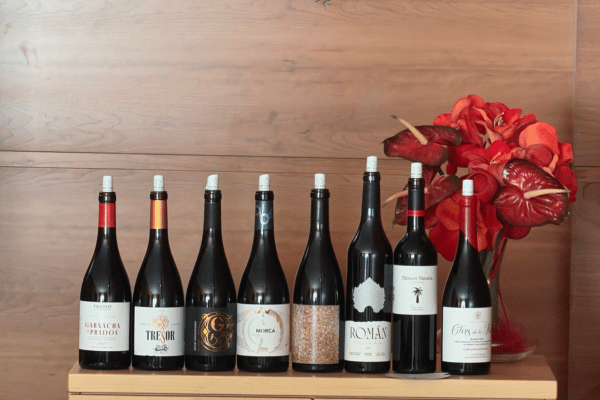
A selection of Garnacha wines tasted on the trip, including the first wine to bear the Garnachas Histórica label, Clos de la Ros from Vinos del Viento
The distinctive profiles of wines from old vine Garnacha
The second part of the study, led by Professor Vicente Ferreira at The University of Zaragoza, studied the particular nature of the varietal aromas found in grapes from young and old vines. Six sites were selected across the DO, with old vine parcels compared to neighbouring young vines with similar soil types. The samples from all the younger parcels were found to be quite similar in profile, with more of the typical red fruit notes commonly associated with Garnacha, whereas the older vineyards were found not only to produce wines with more complex aromas, but also express terroir much more clearly. Specifically, the older vines were found to contain 123% higher levels of methoxyeugenol, a compound found to lead to a greater expression of black fruit and spice aromas. The old vine samples also separated into two clear groups based on provenance, with grapes from Borja, Fuendejalón and Ainzón showing more floral flavours; whereas those from Pozuelo, Magallón and Tabuenca display a fresher, fruity profile.
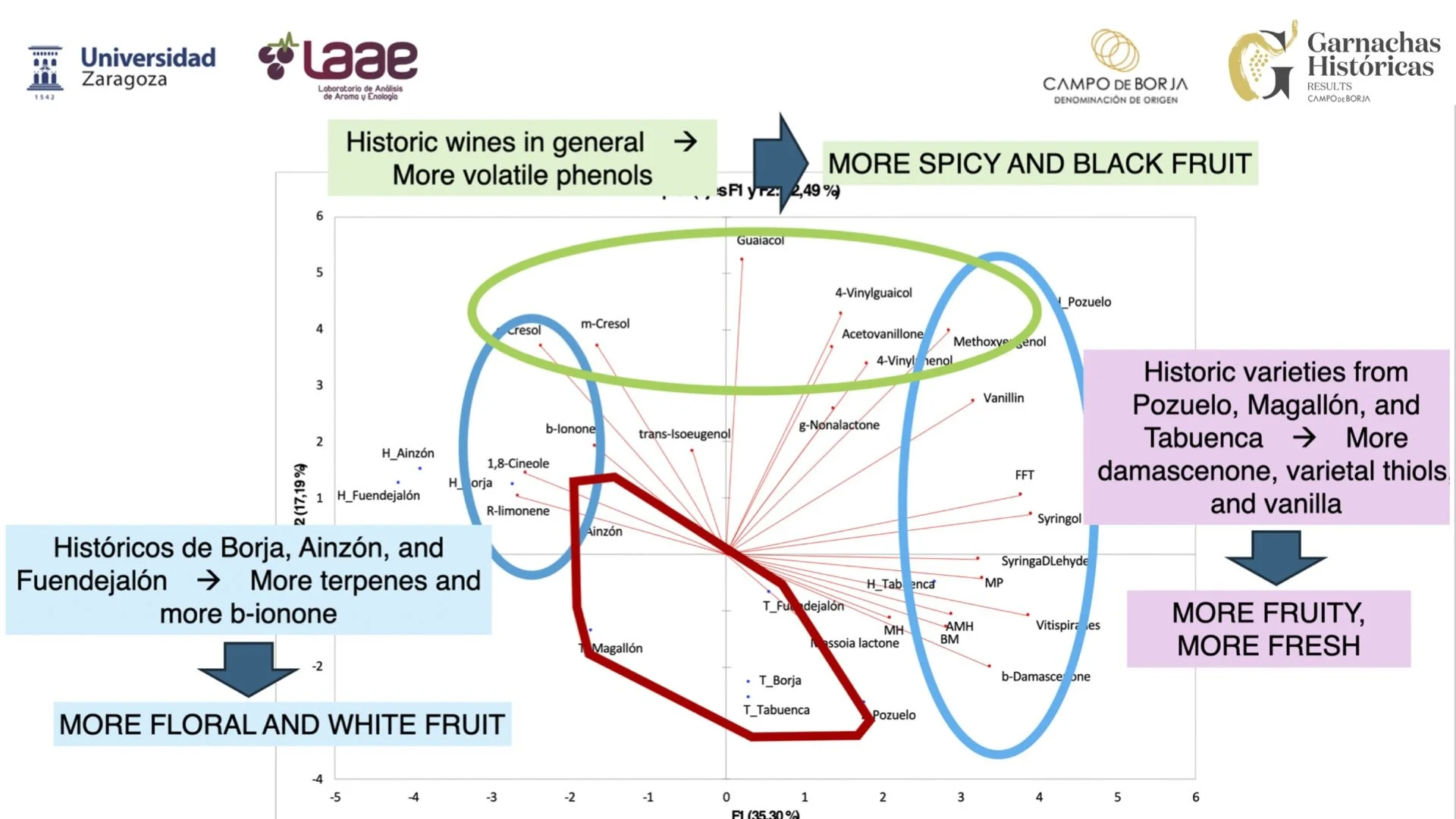
A chart created by researchers at the University of Zaragoza showing the distinct profile of wines from younger “T” vines circled in red, compared to the historic “H” parcels
Tasting the difference
Aside from proving what we have all long suspected - that old vines make more complex, age-worthy and characterful wines - it was interesting to note the distinct profiles of the region's wines in the glass. Prior to the Garnachas Históricas project, the region had undertaken a soil study, which separated the region into three different zones. During the trip, we had ample opportunity to taste old vine Garnacha wines from the different areas, proving the grape variety's ability to create varied wines that reflect the terroir.
The climate in the DO Campo de Borja
Before drilling down into the sub-regions, a quick overview of the Designation of Origin. Campo de Borja is located in the Ebro Valley, to the east of Rioja as you head downriver towards Barcelona. This means the climate is Mediterranean, with over 2,800 sunshine hours a year, but there are some major moderating factors: the altitude and the predominant cierzo wind. The Moncayo Mountain is a constant presence in the region, featuring on many wine labels both in name and image. The highest summit in the Iberian System, the Moncayo reaches a lofty 2,315m, with snow still capping the peaks when we visited in the springtime. The region's best vines are planted in its foothills, as high as 910m, with the north-facing parcels offering cooler conditions. This means that far from being warm all year round, the climate is extreme in terms of thermal variation, with temperatures running from 2-9 C in winter and 17-31C+ in summer. Add to this the Atlantic influence of the cierzo wine - a cold, dry north westerly wind - that moderates temperatures and reduces humidity, and you can see why defining the region as hot would be a major over-simplification (and you should bring a coat if you visit outside of July or August!). Dry, certainly, as it sees very little rainfall, just 350-450 mm per year, and most of the bush vine Garnacha parcels are dry-farmed, as the native grape variety is well-adapted to these conditions.
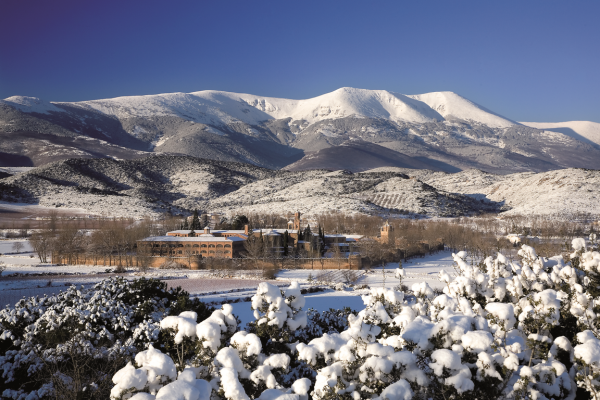
The 2,315m-high Moncayo Mountain, seen here behind the Santa Maria de la Veruela Monastery has a moderating effect on the climate of the region.
The Ribera del Ebro
The lowest zone, with vineyards at elevations between 350m and 450m, this area is associated with chalky soils and is the earliest to be harvested. The villages of Magallón and Pozuelo de Aragón are found here, associated with a concentrated fruit profile.
Prados Garnacha is sourced from the village of Magallón. It shows a very fruit-forward profile of red berry notes, hints of dried thyme and Mediterranean herbs, with an elegant, silky texture.
Located in the same village, the wines of Bodegas Ruberte also showed the ageing capacity of old vine Garnacha. Trésor 2022 from 40 year-old vines stood up to 10-12 months of ageing in 500 litre French and American oak casks, showing a lovely balance of fruit and spicy notes. The Gran Reserva 2010 was still fresh after 16 years, although it also contained Cabernet Sauvignon, Merlot and Syrah in the blend alongside 70% Garnacha; as was a 90% Garnacha wine from the 1997 vintage that had been aged for four years in barrel.
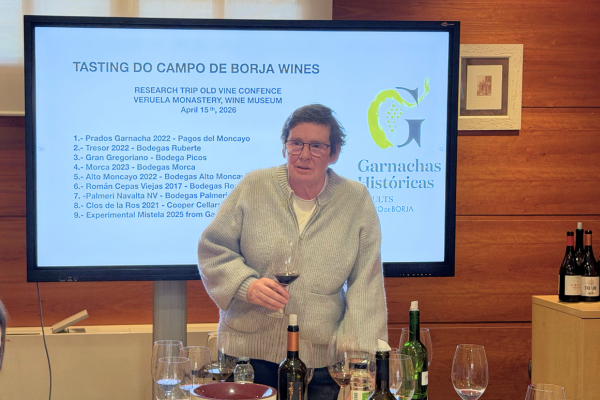
The region’s first female winemaker, Susana Ruberte, from Bodegas Ruberte in Magallón, presented wines from as far back as the 1997 vintage that proved Garnacha’s capacity to age.
The mid-zone
Most of the region's vineyards are concentrated in the middle zone, with some of its finest plots on the gently undulating hills alongside the La Huecha River in the villages of Ainzón, Borja and Fuendejalón. Located at 450-600 metres above sea level, a variety of gravelly and ferrous clay soils are found here. The study by the University of Zaragoza found these villages to be associated with more floral aromas.
Vinos del Viento Garnacha 2022 from Cooper Cellars epitomises this floral character. Michael Cooper, originally from California has been making wines in Aragon since 2022. Sourced from the village of Ainzón, where 35 year-old vines grow at 600m above sea level on stony/calcareous clay soils, it is unoaked, instead matured on its fine lees in concrete for 12 months. This means it clearly displays a very fresh and aromatic varietal profile with a perfumed nose of dried raspberry and lavender notes alongside thyme and rosemary.
In the nearby village of Fuendejalón, Bodegas Aragonesas has developed a new "pago único" system to ensure that the finest old vine parcels remain viable. This means that rather than paying per kilo of grapes harvested (a system that penalises the owners of low-yielding old vines) the growers of these selected parcels are given a set payment per hectare cultivated. This means that the winery has a steady supply of top-quality grapes for their premium Fagus wine, made from a selection of 40 -50 year old Garnacha parcels. Fruit ripeness is a focus when it comes to this wine, with the winery carefully monitoring the grapes prior to harvest to achieve a rich, full-bodied style with a rounded, glycerine texture, blackberry fruit, sweet, ripe tannins and chocolate and coffee notes from oak ageing.
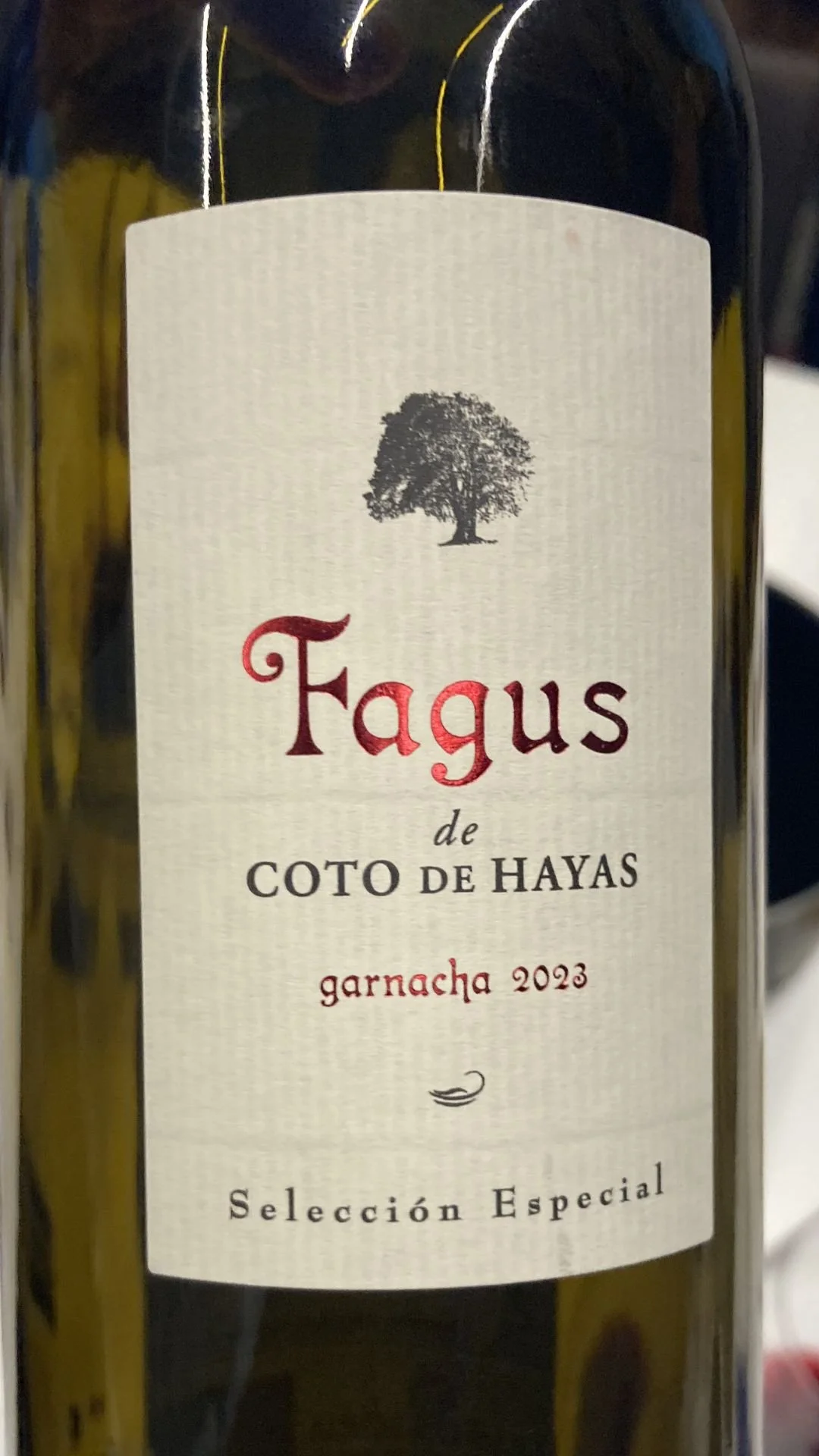
Bodegas Aragonesas pays extra for the grapes from 40-50 year old vines that go into its top Fagus bottling
The winery has also created a new terroir-focused range, with the Nabulé wines sourced from vines that grow on the typical brown-chalk soil of the area around Fuendejalón defined as "terroir 1" in a regional zoning study. The winery uses larger 500L French oak casks to respect the fruit and controls the picking dates to achieve a fresher, longer and more mineral style.
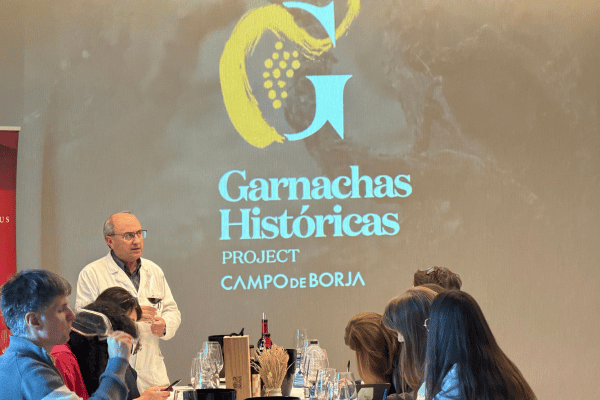
Javier Vela of Bodegas Aragonesas explains how research into soil types inspired the winery’s new terroir-focused Nabulé range
The upper zone
In the foothills of the Moncayo mountain, the vineyards from 600 to 900 metres correspond to the upper areas of Ainzón and Fuendejalon as well as the villages of Tabuenca, El Buste and Vera. Tabuenca is well-known for its old vine parcels grown on the typical ferrous-slate soil, with several new projects buying up old parcels in the area as their owners retire. It is associated with complex, elegant wines with a spiced fruit profile.
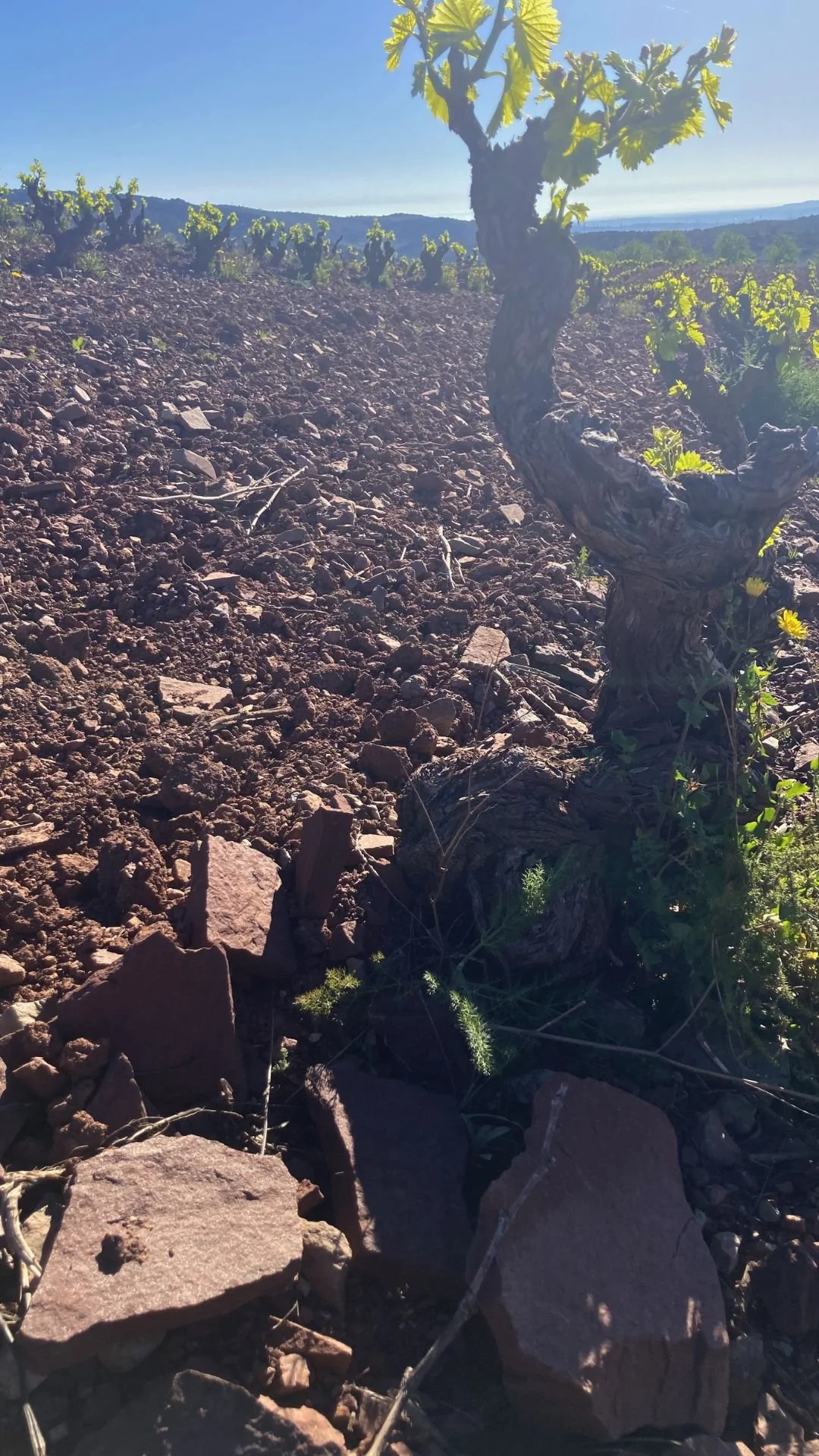
Old vine Garnacha vines in Tabuenca, DO Campo de Borja showing the typical ferrous-slate soil
Terrazas del Moncayo is a single vineyard Garnacha from the Boloncillos vineyard planted in 1976 at 650m altitude (nudging it into the upper zone), made by Garnacha-specialist Mario Lopez at Bodegas Ainzón. Only 3,000 bottles are made on average from this 1-hectare plot strewn with huge dusty orange rocks. I love its interplay of concentrated blackberry and strawberry fruit, black pepper and seamless acidity. Mario picks in early October to ensure that the grapes maintain their freshness.
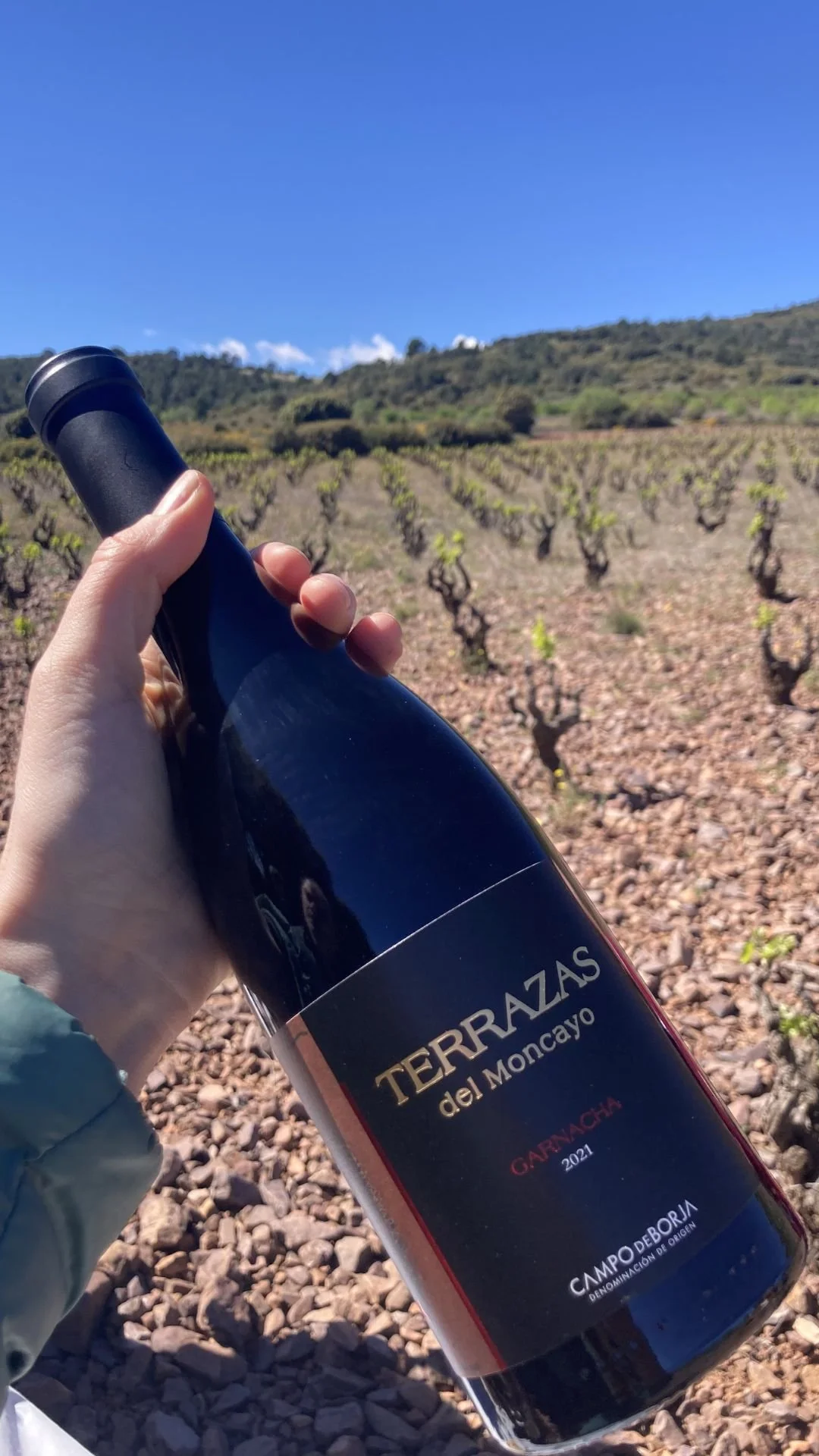
Terrazas del Moncayo comes from the low-yielding Los Boloncillos vineyard planted in 1976 at 650m in Ainzón
Palmeri Silicia Mountain Wines established a boutique winery in the village of Tabuenca as a joint venture between the Cuartero brothers, the Palmeri Sicilia winery and a Swiss investor. Jesus Cuatero worked in the Tenuta Palmeri in Italy and set up the winery in recognition of the quality of old vine Garnacha fruit in the village which is located at 700m above sea level.
Palmerí Navalta NV is made from 100% Tabuenca Garnacha from different vintages. The vines are an average of 50 years old and certified organic. It brims with resinous notes of camphor, menthol and thyme over red cherry and strawberry as well as darker fruit notes and a touch of cinnamon oak. I find the tannins have a particular mineral, iron-like character with a herbal lift to the acidity giving freshness. Despite its 16% abv, it doesn't feel overly alcoholic.
The latest project to be established in the area is by Javier Gil Pejenaute who worked for over 18 years with Alvaro Palacios at Palacios Remondo in Alfaro, Rioja before setting up in Tabuenca in 2020. He brings Alvaro's particularly terroir-based philosophy to the region, with separate bottlings of old vine parcels from the village. He works with 10 hectares of 40 year old+ vines at 700 to 850m and avoids overt oak influence in his wines.

Javier Gil Pejenaute with Las Paradas, a single vineyard bottling from Tabuenca in DO Campo de Borja
Tabuca 2023 blends three parcels from ferrous slate, red clay and sandy soils. Silky in texture, it shows a iron-like grip with a long finish.
Less typical for the village is Pilar del Cerro 2023 as it comes from a soil rich in calcium carbonate. Harvested as early as the 15-20th September (most wineries in the area wait until November) it is uniquely perfumed and ethereal with notes of lavender and violets, with a touch of black pepper and raspberry fruit. It is aged in a ceramic egg rather than oak.
Las Paradas 2022 comes from the oldest soil - a mixture of sandstone, gypsum and ferrous clay - at 815m. This 1.5ha vineyard gives a particularly interesting texture, with the fruit seeming to hang around a mineral core. It's slightly smoky, with red cherry and violet notes.
Cross-regional blends
Of course, single vineyard or even single village wines make up only a tiny proportion of the wines bottled in the DO Campo de Borja. The majority of the production is in the hands of the co-operatives that blend from a variety of parcels across the region. Bodegas Aragonesas and Bodegas Borsao are the two largest wineries in the region, accounting for over two thirds of the region's production between them.
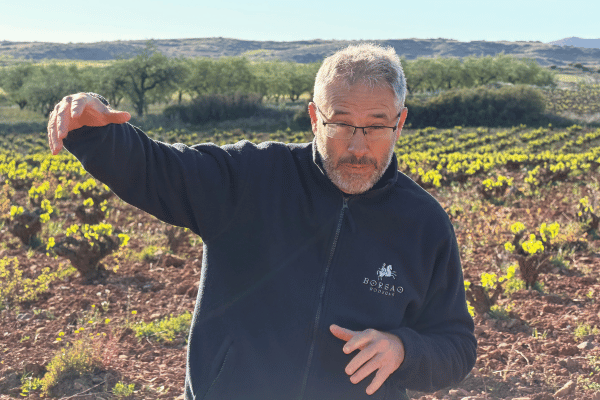
Bodegas Borsao manages old vine vineyards across all three sub-zones of the DO Campo de Borja
Bodegas Borsao was created in 2001 when the co-operatives of Pozuelo, Tabuenca and Borja came together to form a union. This means it has access to fruit from all three areas, which it uses to great effect in its flagship wine Tres Picos, named after the three peaks of the Moncayo mountain. I've been tasting this wine for many years, and it is brilliantly consistent, thanks to the winemaker's ability to use the best parcels each vintage. Although the sourcing changes slightly each year, it is made from 100% Garnacha, mainly from the medium zone around Borja, with some Pozuelo and Tabuenca fruit. This makes it particularly well-balanced and complex with notes of ripe red cherries as well as blackberry, raisin and Christmas cake spice, with that resinous freshness that typifies the higher altitude fruit.
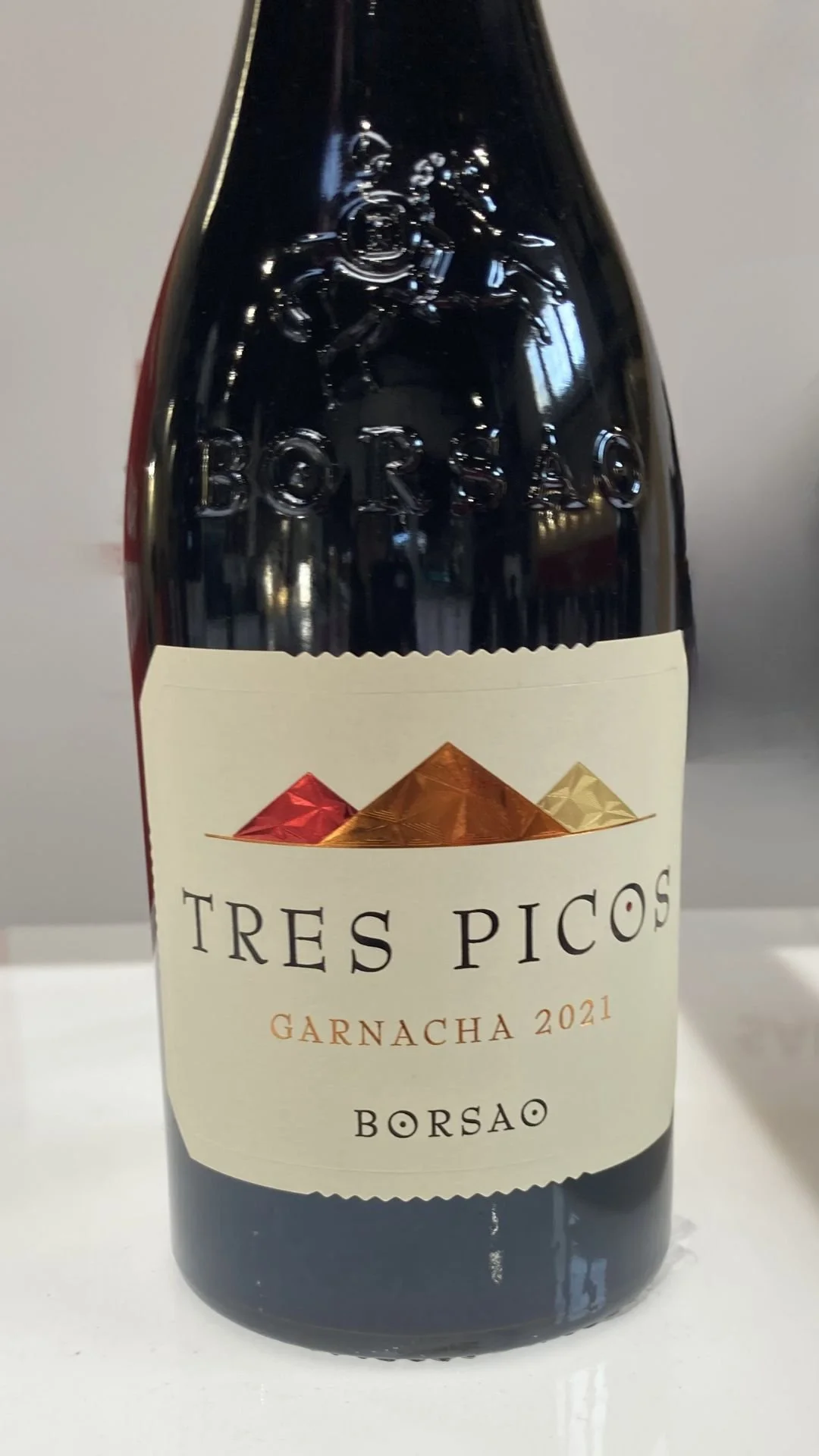
Tres Picos is made from a blend of old vine Garnacha from different areas, creating a complex, balanced and remarkably consistent wine
Another premium project that blends fruit from Borja and Tabuenca to great effect is Bodegas Alto Moncayo. Set up in 2001 as a joint-venture between Borsao, Jorge Ordoñez, Chris Ringland and Dan Philips, it works with old vines aged 40+ years in the villages of Borja and Tabuenca. Veratón 2022 combines grapes grown at 850m on red clay mixed with sandstones in Tabuenca with old vine fruit grown on gravel/pebbles at 550m in Borja. I find it to be a particularly long and expressive wine with distinctive notes of Earl Grey tea, over forest fruits, balsamic notes, chocolate and a savoury meatiness.
Bodegas Morca, owned by the Gil Family Estates from DO Jumilla, is another premium winery established in the area around a decade ago. Its Morca Garnacha 2022 is a dark and spicy example of old vine Garnacha from the villages of Borja and Tabuenca aged in French oak.
Conclusions
DO Campo de Borja is often lazily associated with easy-drinking, fruity Garnacha wines that offer great value for money. This research has proven that the region's old vine Garnacha vines, grown in the foothills of the Moncayo Mountain, can produce so much more. From lavender-scented, lean, ethereal wines, to rich, complex blockbusters, and pretty much every style in between, if you love wines with vibrant fruit, old vine Garnachas from the DO Campo de Borja are worth seeking out.
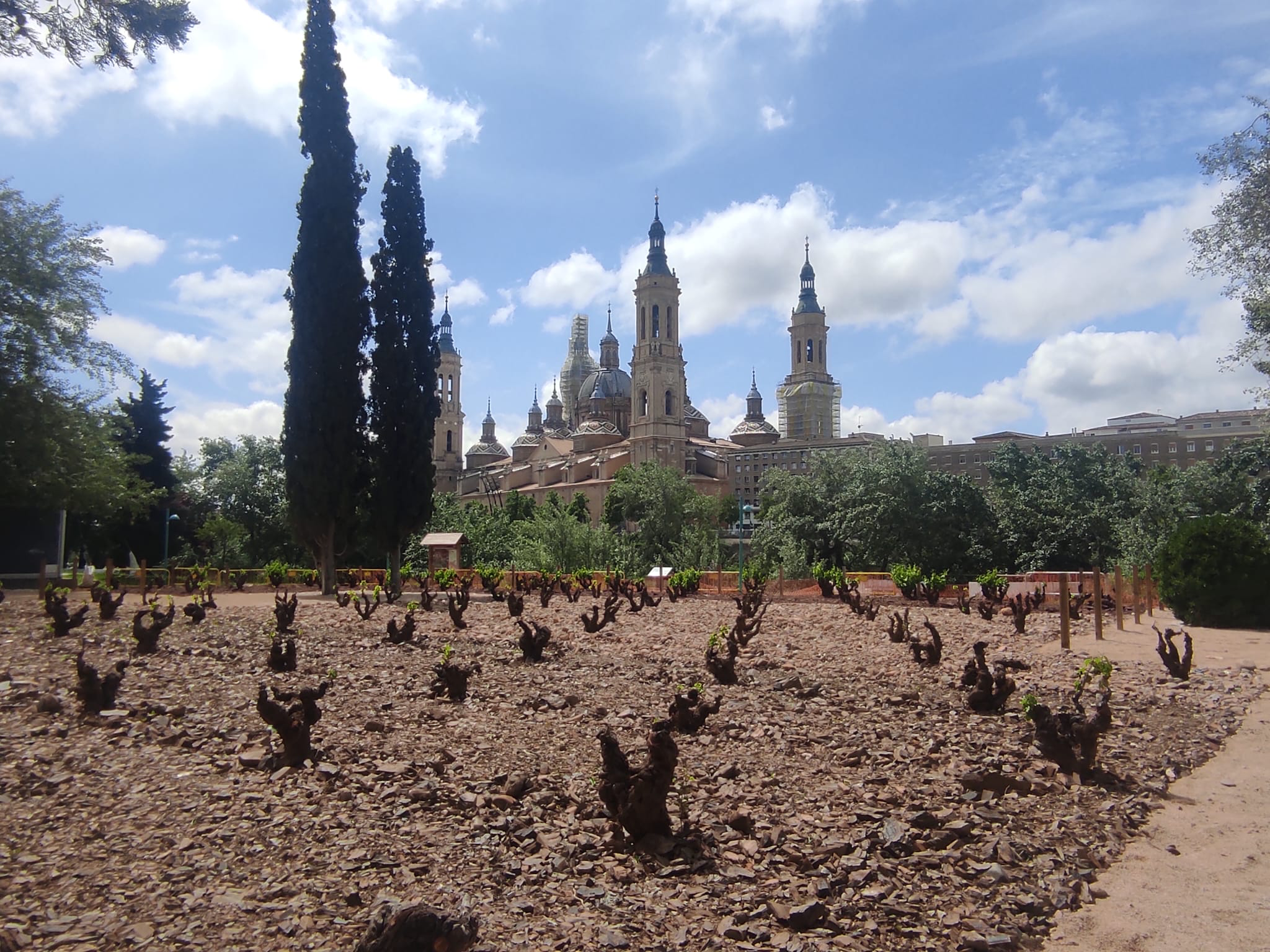
Garnacha vines from DO Campo de Borja, planted in 1975 and transplanted in 2025 in the Macanaz park in the centre of Zaragoza to show the importance of the variety and the DO to the capital city of Aragon.
Watch the video to learn more about the results of the Garnachas Historicas research by clicking on the button below:
Sign up for our tasting in London on the 8th June to taste a range of old vine Garnachas from the region.