
Silvina Van Houten, “La chica de las old vines”
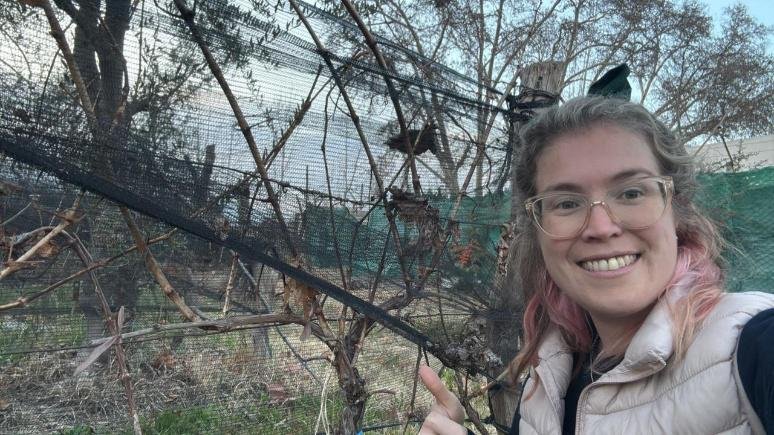
Silvina Van Houten with one of the many old vines that she has identified as part of a project to collect and preserve Argentina’s diverse genetic material
Agricultural engineer, Silvina Van Houten, is part of the viticultural team at Catena Zapata in Mendoza, Argentina. She tells us about what her work entails, and why it has lead to her being known locally as “la chica de las old vines” or “the old vine girl.”
My name is Silvina Van Houten, and today, I am often recognised as La Chica de las Old Vines (pronounced O-L-D V-A-I-N-S). This nickname stems from my work over the past few years with old vine and genetic diversity preservation projects. People frequently recognise me at the winery, in restaurants, and even on the streets of Mendoza, where I’m often asked if I’m interested in knowing about old vine vineyards.
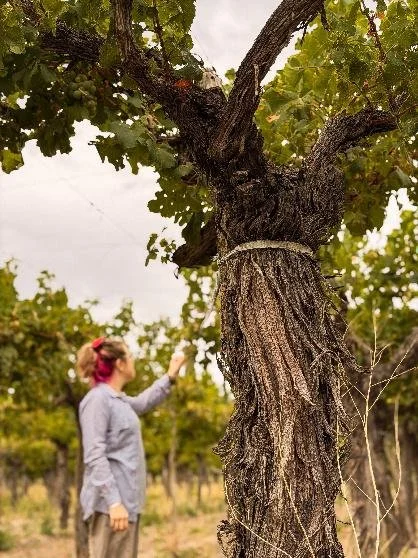
Silvina Van Houten in an old vine vineyard
My work involves identifying old vineyards and collecting cuttings to preserve in Catena’s Viejito de Rivadavia (18 massale selections from different varieties) and Jardín Eterno (with 1137 accessions of Malbec) vineyards. Our goal is to safeguard the genetic material of Argentina’s massale genetically diverse ungrafted vineyards. While we have genetically diverse selections of Malbec, we also have many other varieties, such as Criolla, Cabernet Sauvignon and Bonarda. Our goal is to preserve the old vine genetic material, by preventing old vine vineyards from being uprooted. There are 29,000 hectares of vineyards planted before 1950 in Argentina, all massale and ungrafted. I strongly believe that Argetina’s ungrafted massale old vines have world heritage value.
As an Agricultural Engineer, I joined the Catena viticulture team a few years ago as the Sustainability Manager. My deep interest in the genetic variability of vines has always driven me to expand my knowledge. For the past five years, I’ve been working toward a Master's in Oenology and Viticulture, with my thesis focusing on analysing Malbec's fruit set and genetic diversity. Little did I know that over time, this would grow into a passion, one that has become central to both my professional life and personal mission: to find the best ways to preserve this precious plant material that is unique to Argentina and has been lost in many other parts of the world.
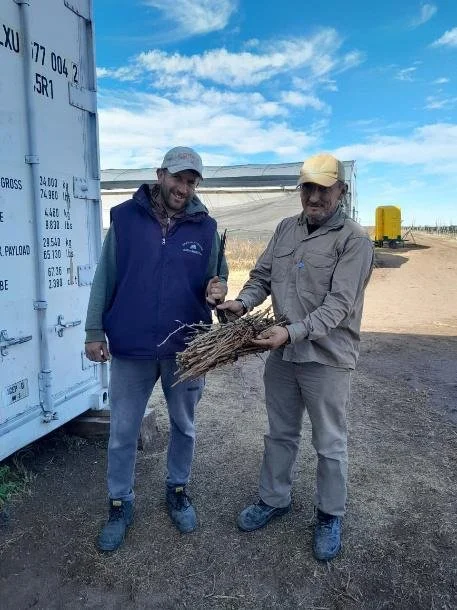
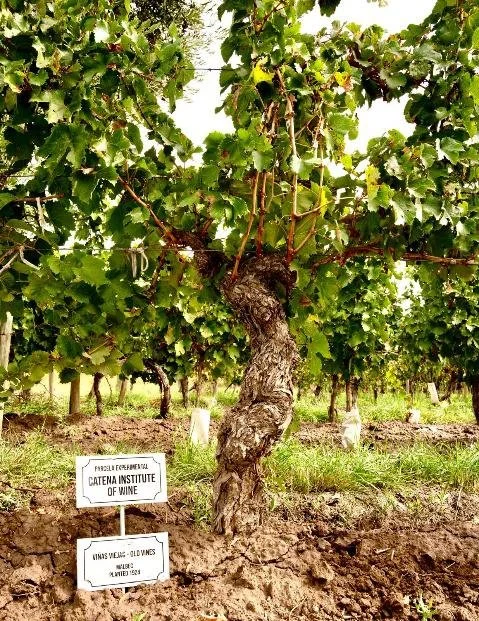
The team collecting old vine cuttings The “Viejito de Rivadavia” vineyard
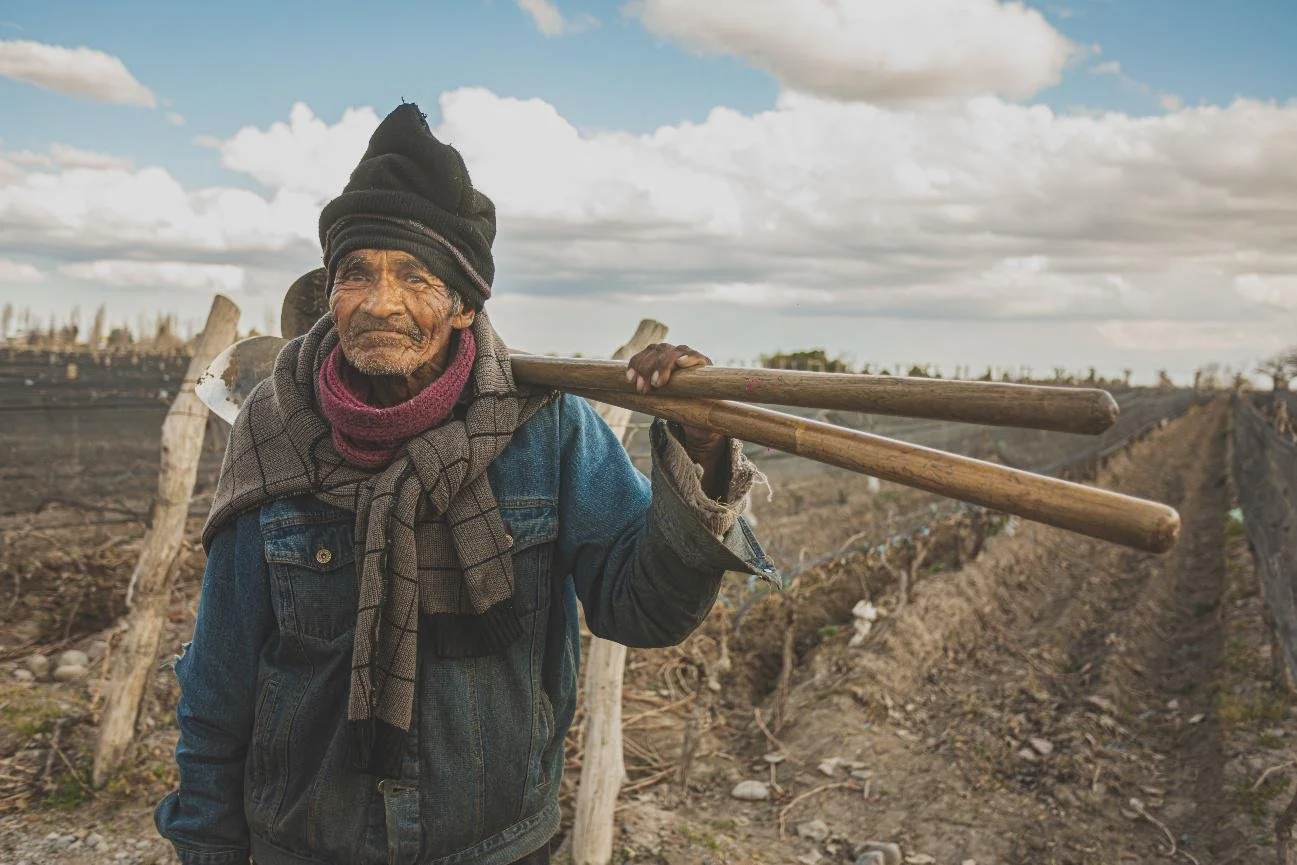
The “Viejito de Rivadavia” (the little old man from Rivadavia) vineyard is named after one of the winery’s hardworking employees. Pictured here, he worked in the vineyard for many years before his retirement.
What makes Argentina particularly exciting is the abundance of genetic diversity in the fields we harvest. Across the country, from north to south, we have more than 100,000 hectares of massale selected, genetically diverse vineyards, including in Mendoza, where I work. This is unusual because most vineyards worldwide are clonal, while almost 90% of Argentina's vineyards are ungrafted and massale.
We are excited to be part of the Old Vine Registry to help protect and raise awareness for our old vine vineyards. Initially, we were unsure if we could gather all the necessary data to create our registry, but with the support of Alder Yarrow, we managed to accomplish it and now as of today we have registered 69 vineyards. Thank you Alder! (my new everyday pen pal)
I am proud to be known as La Chica de las Old Vines and grateful for the support of so many others who are equally committed to preserving old vineyards. Recently, one of our viticulturists approached me with news of an old vineyard in Eastern Mendoza. "Are you interested in this 80 year-old vineyard? I think you’ll really like it," he said. I was struck by the fact that someone so dedicated to winemaking—who typically focuses on high yields and maximizing efficiency—was now moved by the idea of preserving ancient vines. Normally, he wouldn’t have been interested in a low-producing vineyard, but now, even someone with such a production-driven mindset was keen on preserving old vines. This shift represents significant progress in our project and is proof that our work is bearing fruit.
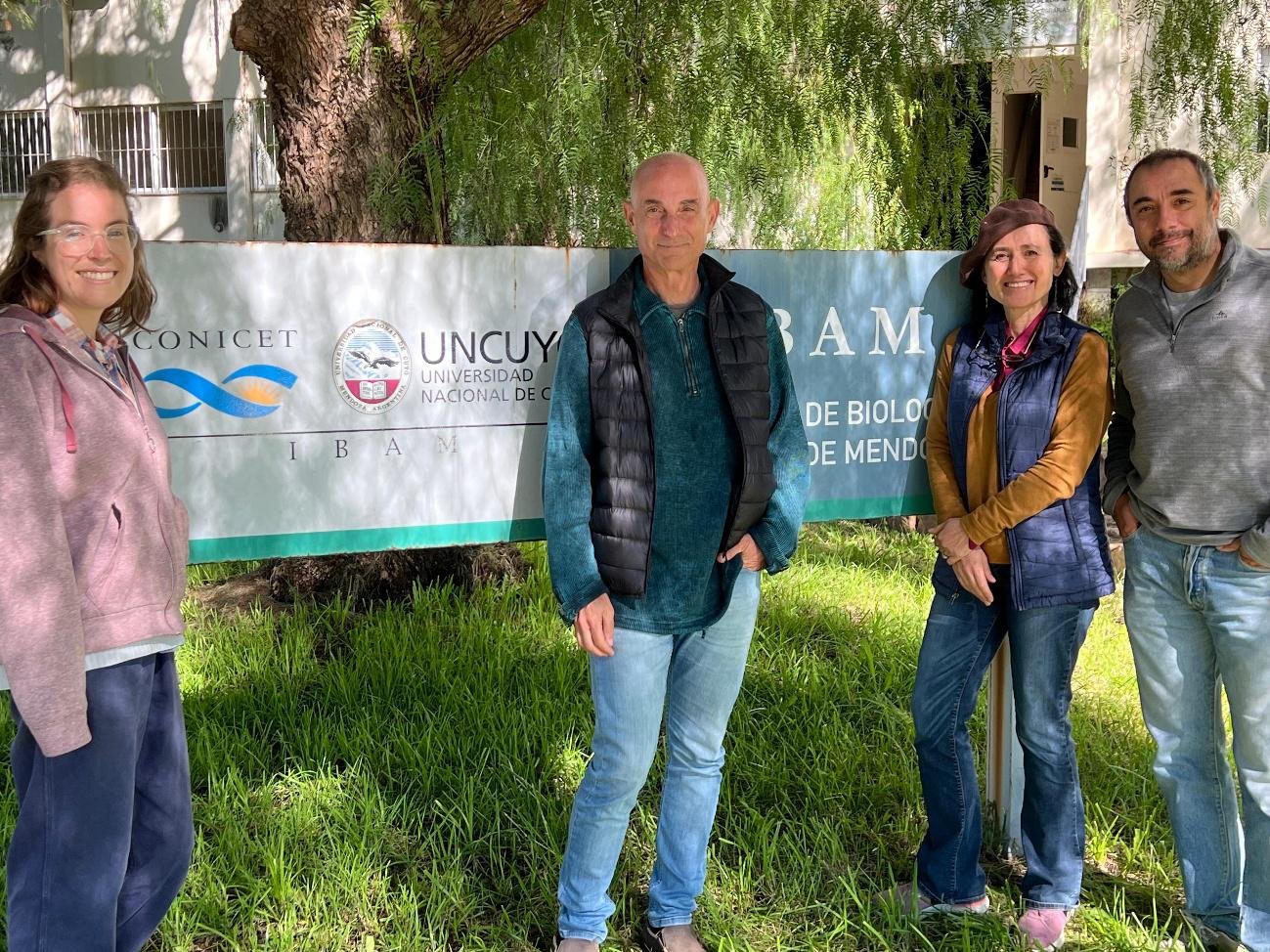
Silvina van Houten, Diego Lijavetzky, Laura Catena and Sebastián Gomez Talquenca at the Institute of Agricultural Biology of Mendoza (IBAM)