
Bideona’s tapestry of old vines

View of the Sierra de Cantabria mountains from the Bideona winery
23rd January 2026
A visit to member Bodegas Bideona in the Rioja Alavesa - By Anna Harris-Noble
When I visited Bideona in the Rioja Alavesa in spring 2025, one of the things that impressed me the most - aside from the beauty of the view from the visitor centre - was the blackboard that showed when every single parcel was harvested and what each wine they went into. It gives you an idea of the scale of the harvesting operation and in fact, is key to the whole operation.
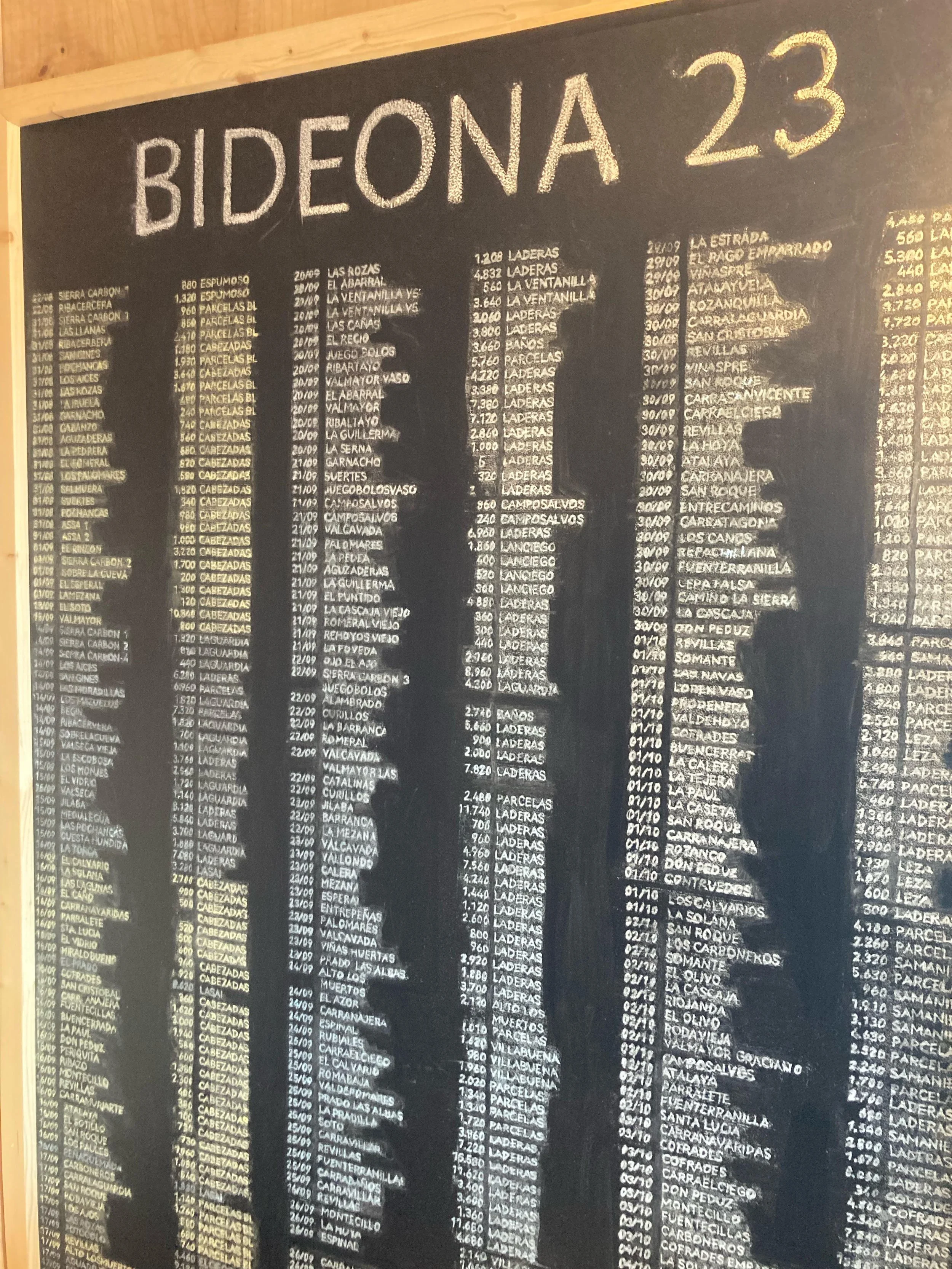
Blackboard detailing the date each parcel was harvested in the 2023 vintage and which wine the grapes went into
Having been started in 2018, the winery project is relatively young, but stems from Managing Director Andreas Kubach’s early experience, tasting wines to go into the Schenk Rioja Reserva. He visited Rioja Alavesa on many occasions and was astounded by the quality of the wines from old vine vineyards that were being put into blends. He decided that he would love to learn more about wine with the aim of one day being able to show the quality of wines from the area when not masked with oak.
After completing his MW studies, a chance encounter with Gorka Izaguirre led Andreas to a bankrupt winery owned by seven vine growers with hundreds of parcels of old vines between them across several villages of the Sonsierra.
Andreas set about overhauling the winery, with the help of winemaker Tao Platón and Península co-founder Sam Harrop MW; alongside six of the original vine growers.
Now part of the Península Vinicultores group, the winery manages around 300 vineyard plots, most planted between 1920 and 1980, and makes up to 100 different micro-vinifications.
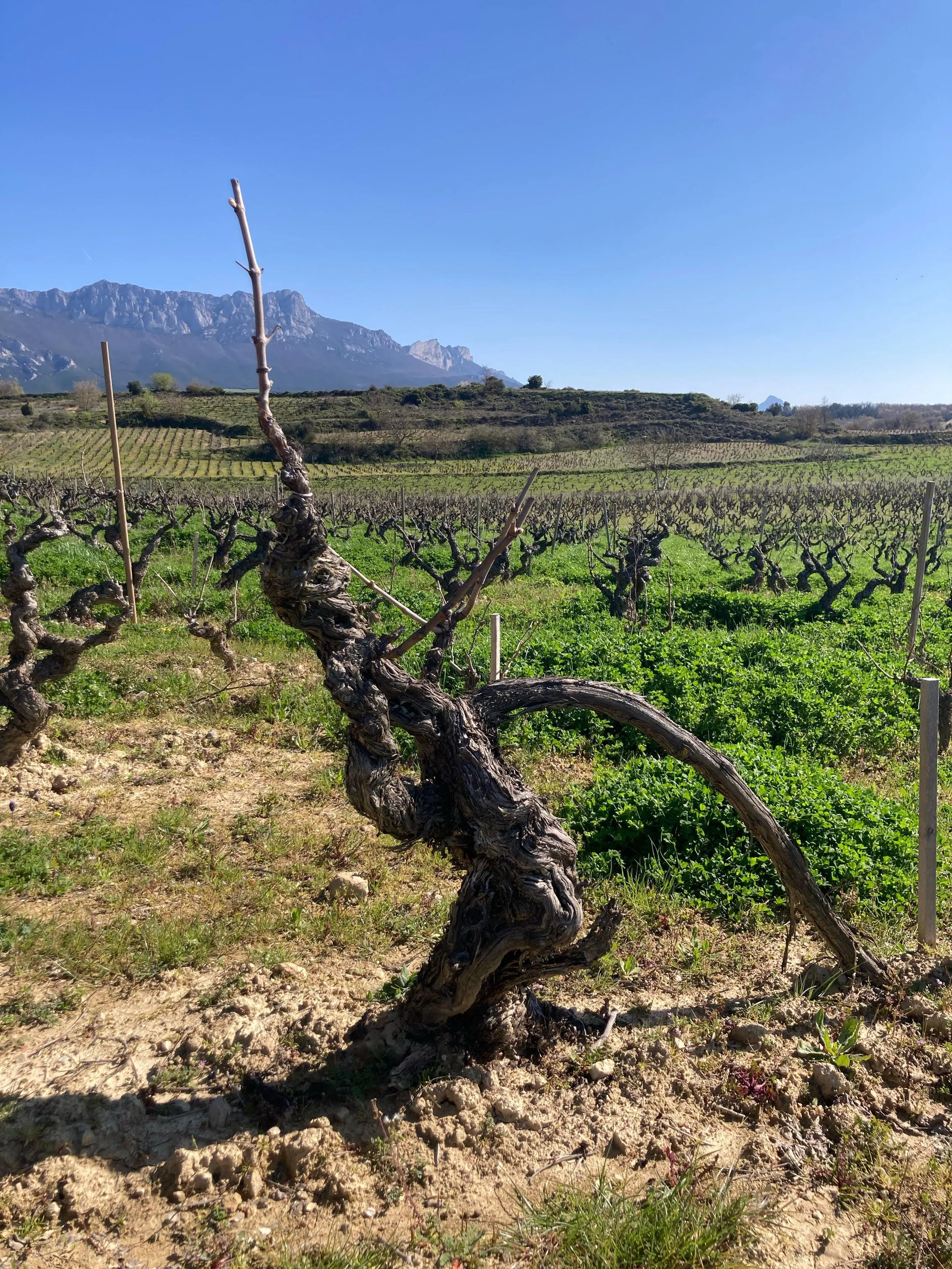
One of the winery's old vines showing the traditional technique of layering used to propagate vines in the past
The youngest vines (average 30 years) go into the Mayela range, bright crunchy unoaked reds, each bearing the face of one of the winegrowers. Unlike many "cosecha" reds in Rioja, they are not made using carbonic maceration, so you get really pure Tempranillo fruit character. The Parcelas white and reds are made from vines of an average of 50 years of age, essentially declassified village wines. The white is a particular favourite of mine, with a lovely saline minerality.
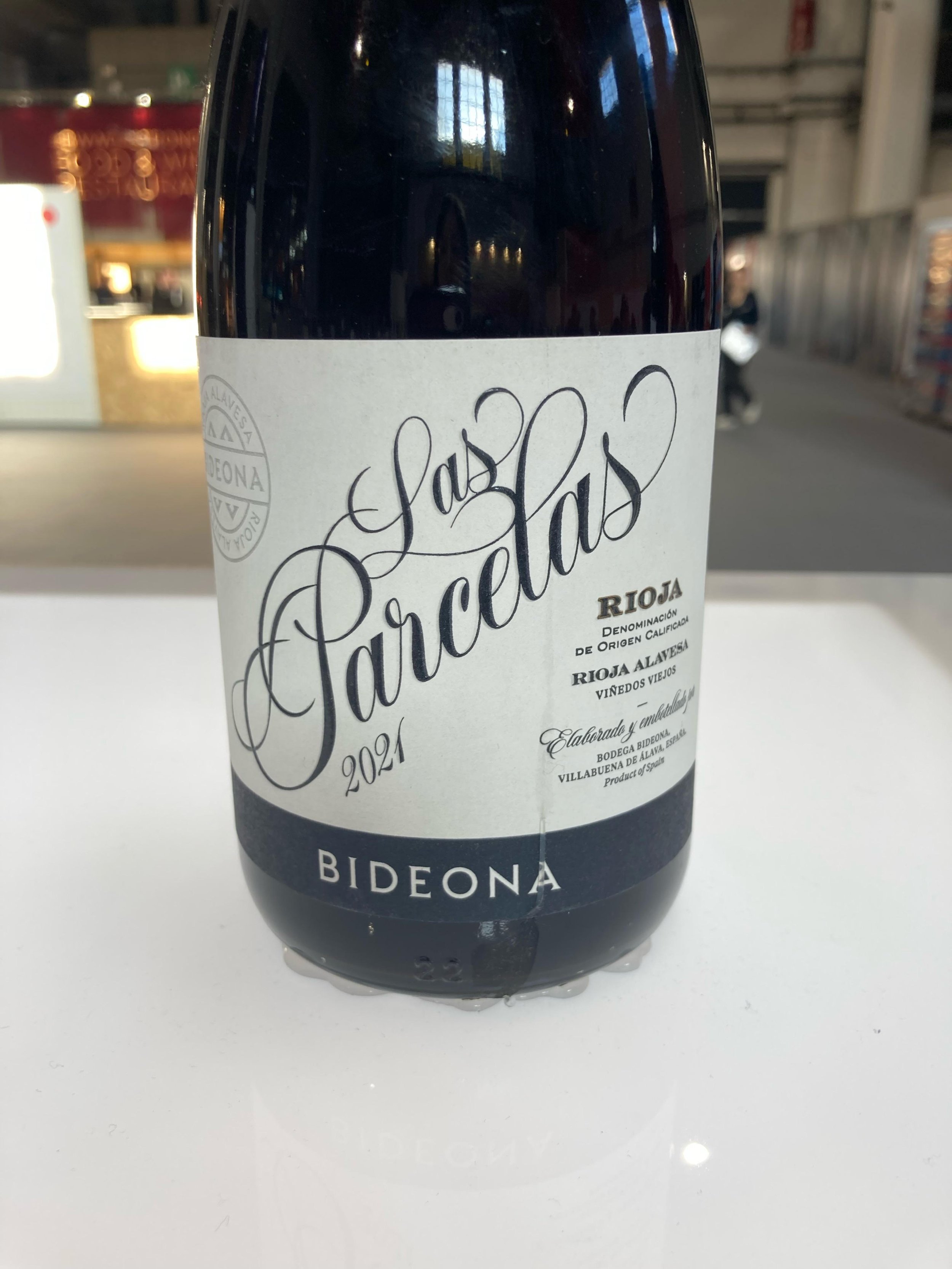
Bideona Las Parcelas 2021 from a blend of different vineyards with an average of 50 years of age
Then come the village wines. From the juicy red fruit and chalky acidity of Laguardia, to the tighter blue fruit and graphite notes of Samaniego; the perfumed balance and silky texture of Lanciego with hints of blood orange; the bright red berry fruit and elegant tannins of Villabuena; the use of oak is intentionally limited to ensure that the fruit character of each village are shines through. All are made from old vines (average 50-60 years), with the oldest are found in Leza, evident in the wine's tannic concentration and depth.
These wines are field blends. Although Tempranillo is the majority variety across this area, the vines are interspersed with other plantings. The other varieties that go into V1BN4 from Villabuena, for example, include Garnacha and Graciano. White varieties, which account for around 10% total surface area, include Cagazal, Viura and Alarije, although these are separated out to make white blends for all but the top single vineyard wines.
Kubach believes that it is this biodiversity that makes the old vineyards particularly worth saving, and his presentations usually feature a map of a parcel with each different variety represented by a coloured dot. It looks like the close up of a pointillist artwork.
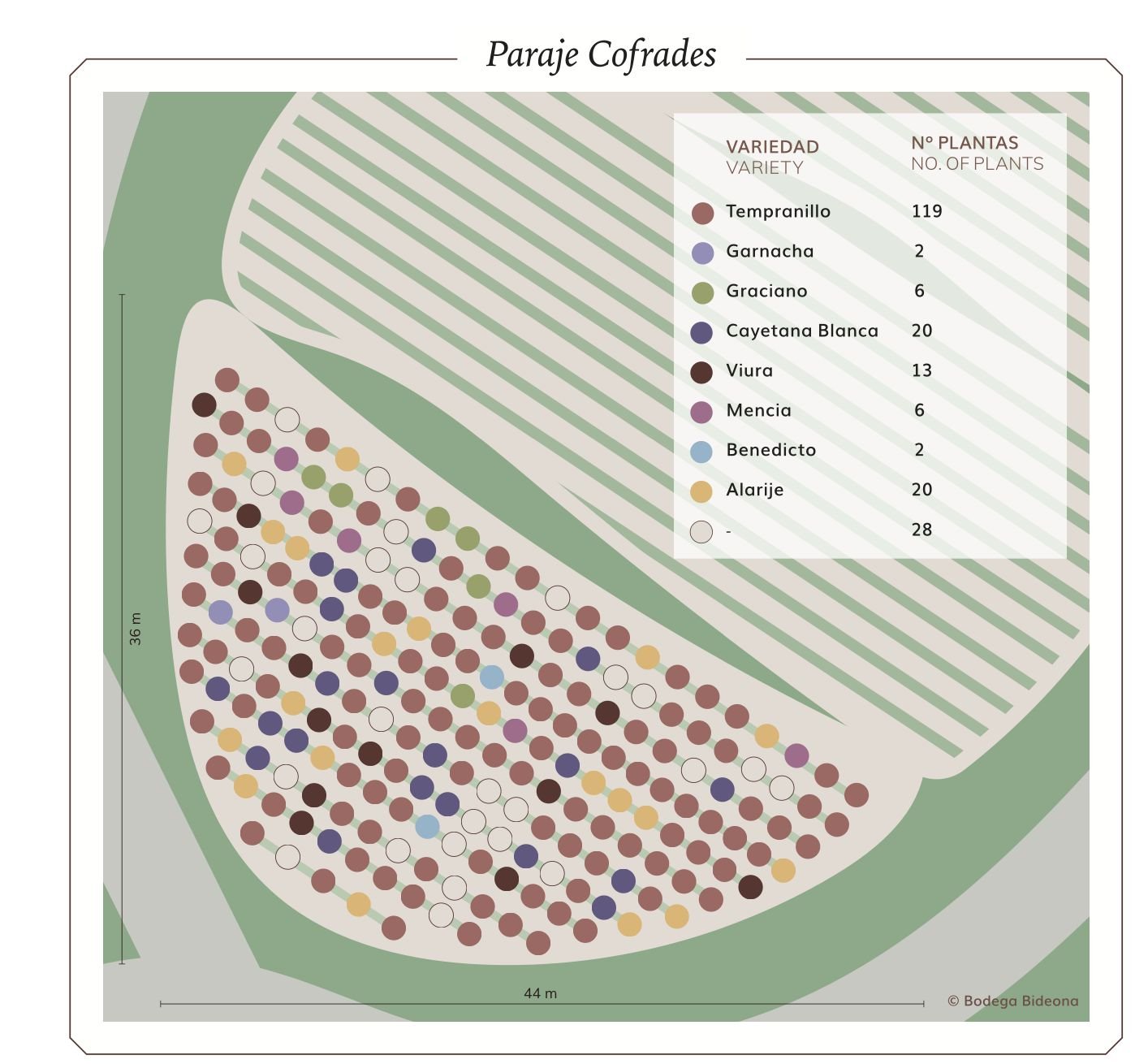
Map showing the myriad grape varieties identified in the Cofrades plot, each depicted with a different coloured dot
The newest wines to be added to the range are single vineyard wines. Cofrades and Galtzada were the first to be launched, followed by Lezagoia in 2025. Cofrades is from a plot planted back in 1945 in the village of Leza. Tempranillo makes up around 60% of the ungrafted vines, with other varieties including Garnacha, Graciano, Cagazal, Viura, Mencìa, Benedicto and Alarije. I found Cofrades 2021 to be very elegant wine, with complex savoury and spicy notes of red pepper.
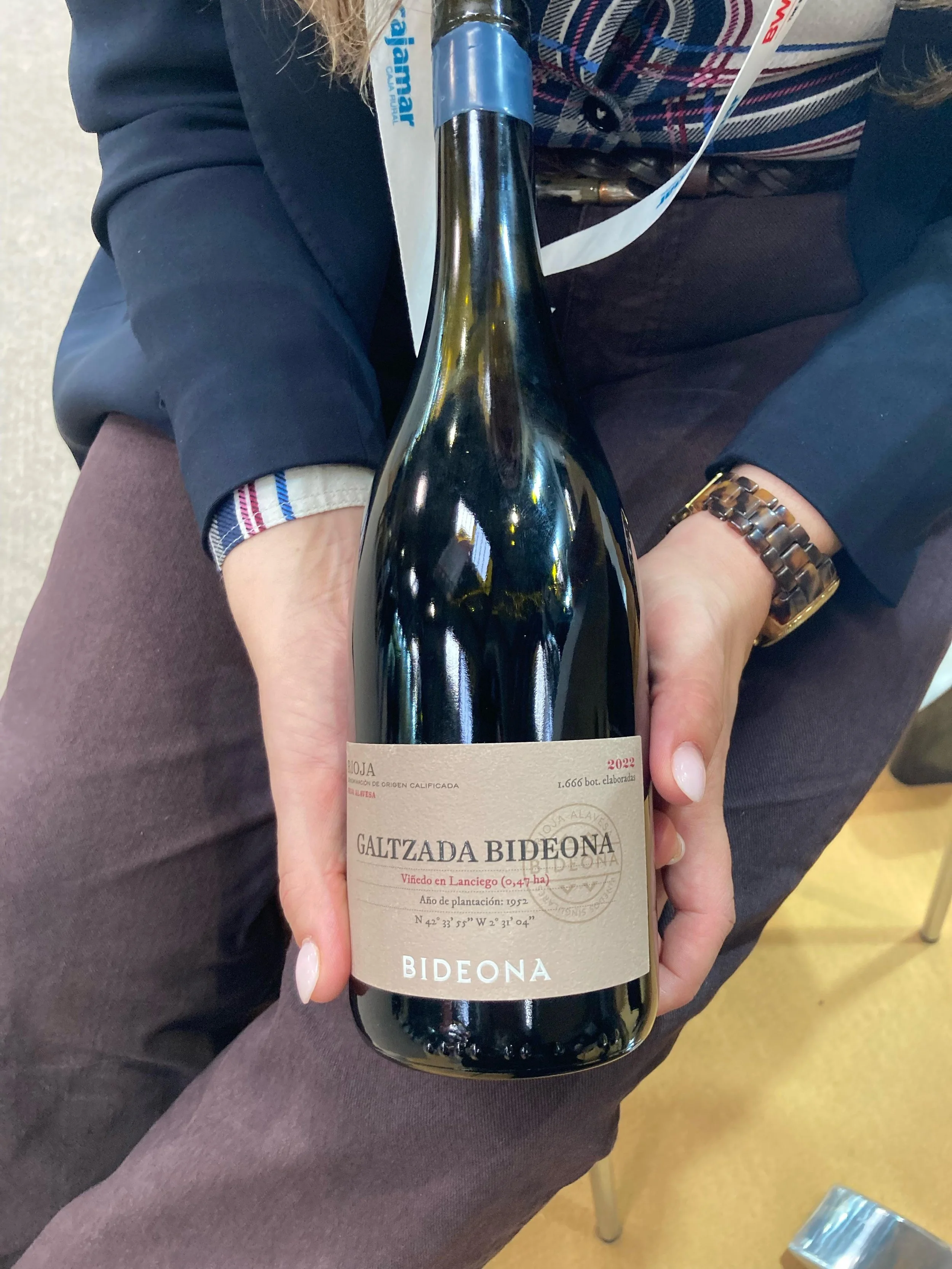
Galtzada, Bideona’s first single vineyard old vine Garnacha
From a vineyard in the village of Lanciego planted in 1952, Galtzada is unusual in that the majority of the vineyard is planted with different clones of Garnacha rather than Tempranillo. The 2022 vintage is delightful, offering Garnacha's typical juicy red fruit, but the added acidity and attractive tannic structure given by old vines cultivated at considerable altitude (almost 600m.)
For those resident in the UK, it is worth highlighting that the winery supplies Marks and Spencer with its "Single Village Rioja" made from old vine parcels in Laguardia. At £18, it certainly overdelivers.