Asprinio d’Aversa: 200-Year-Old Vines Reaching 15 Metres High — From Confiscated Land to Living Heritage
By Michele Shah, OVC Regional Ambassador for Italy, reporting from Campania
At Vitematta in Casal di Principe — the name literally translates as “mad vine” — every bottle of wine carries a story of social redemption. The name is particularly apt for these extraordinary Asprinio d’Aversa vines, trained to heights of up to 15 metres. Here, Asprinio d’Aversa DOC is produced from land once confiscated from organised crime and transformed into work, dignity and a future for the community.
This is a place shaped by the long and powerful grip of the Camorra and other criminal networks that held sway across this part of Campania. In the Caserta area, organised crime exerted influence not only through violence and intimidation, but also through control of land, businesses, employment and local economic life. Vitematta represents a very different use of that land and a different future for the people who live there.
During our visit, Michele Scarpa, the former commander of the Carabinieri in Casal di Principe, explained to us just how extreme the situation had once been. He described this small area as one of the most deeply entrenched strongholds of the Camorra in all of Campania, where criminal clans had exercised a powerful and pervasive grip over the territory and its people. He told us that he had spent 30 years fighting them, seeing members of these criminal organisations arrested and sent to prison — where, he said, many of them still remain. Hearing this directly from someone who had spent three decades confronting organised crime gave another dimension to the story of the land we were standing on. There is a complexity to Campania that is mirrored in the character of its wines.
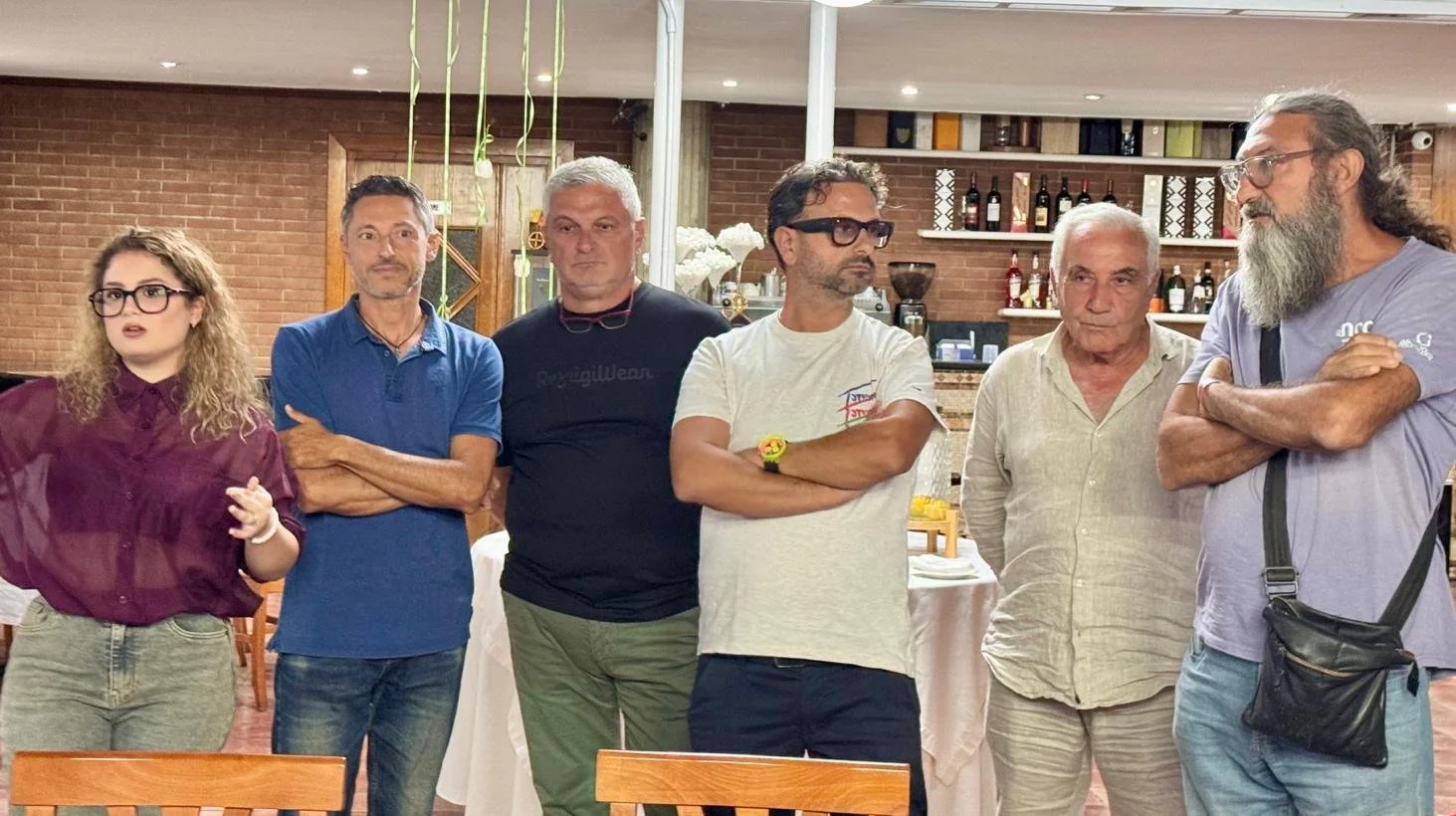
From left to right: Anna Guida; Gianluca Tommaselli; Michele Scarpa; Vincenzo Letizia; Francesco Zagaria; Pasquale Corvino
The Alberata Aversana — an extraordinary living heritage
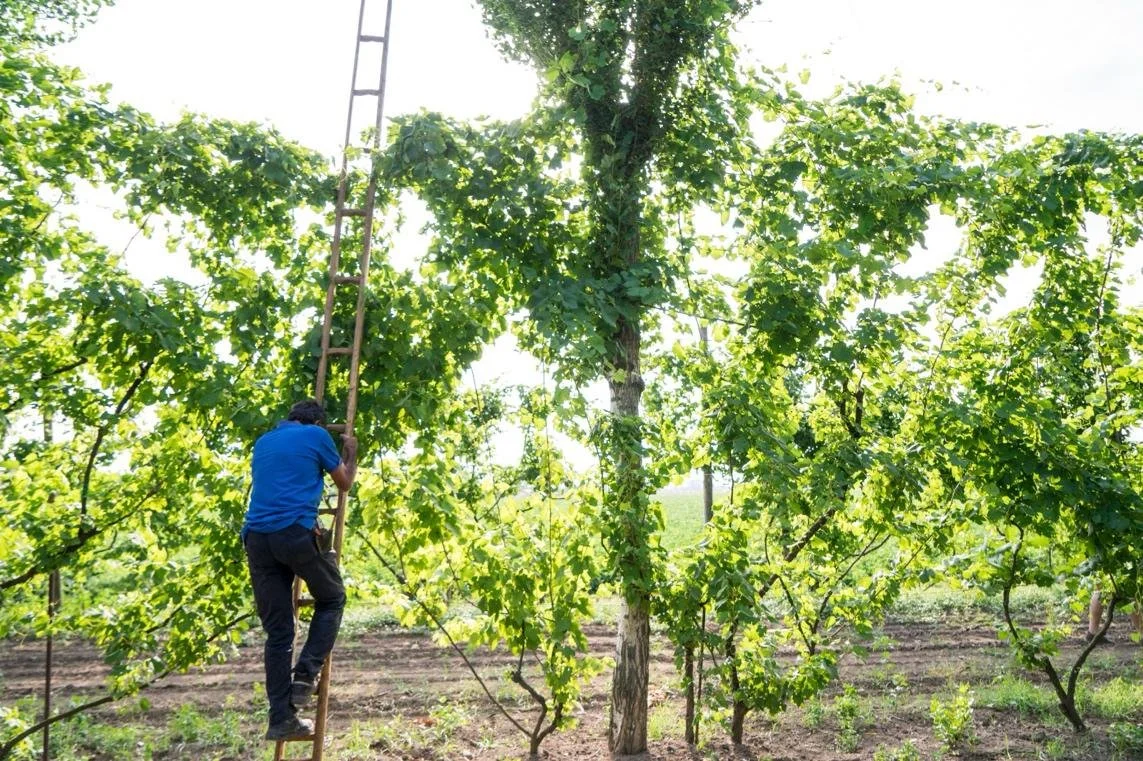
Vincenzo Letizia, who heads the technical and agricultural team at Cooperativa Sociale Eureka Onlus and is the driving force behind Vitematta, has built the project around the revival of Asprinio d’Aversa DOC and the ancient alberato system — vines traditionally trained between tall poplar trees, or pioppi, and harvested by hand from ladders that can reach 12–15 metres.
Asprinio d’Aversa - Vitematta
The Vitematta estate manages around 20 hectares across Casal di Principe, Villa Literno and Santa Maria La Fossa, of which approximately seven hectares are planted to vines. The vineyards include remarkable old alberata vines and other ultra-centenarian plants. (Vitematta)
Vitematta produces approximately 90,000 bottles in total, of which around 6,000 bottles come from the historic alberata vines. In addition to Asprinio, the winery also produces Falanghina and Aglianico, although these account for only around 9,000 bottles in total.
Some of these remarkable high-trained alberato vines are more than 200 years old and pre-phylloxera. Their branches can reach heights of 12–15 metres, with each plant spreading across several hundred square metres and producing as much as 200 kilograms of grapes. The vines and the poplar trees that support them form part of an ancient living landscape and are important witnesses to the agricultural history, culture and identity of the Aversa area.
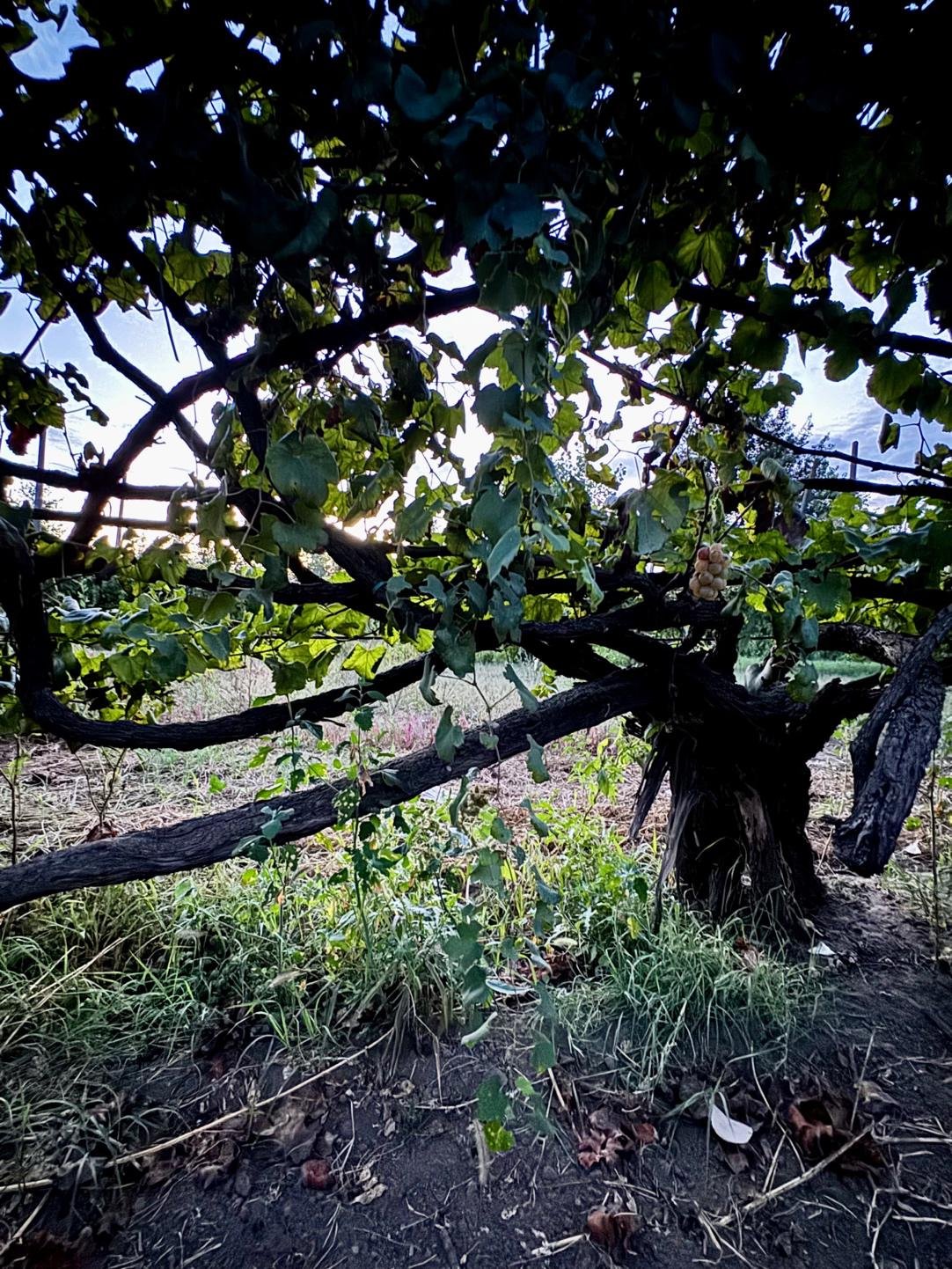
200 years old and pre-phylloxera Asprinio d’Aversa DOC - Vetamatta
Their survival is also a story of resilience. These vines have endured changing times, economic pressures and the decline of traditional farming practices, yet they continue to produce fruit. Their genetic heritage is being preserved through the propagation of cuttings and young plants from the old vines, helping to ensure that this unique material survives in the vineyards of future generations. In this way, the alberato system is not simply being conserved as a historical curiosity; it is being kept alive as a working agricultural tradition.
“The history of the Alberata Aversana is deeply rooted in the ancient viticultural culture of the Aversa area. Vitematta describes the system as associated with the Etruscans, in which vines were “married” to living supports such as poplar trees,” explains Letizia. Other historical sources likewise associate the traditional married-vine system of the Aversa plain with Etruscan viticulture, although the precise origins of the Asprinio grape itself remain the subject of historical and scientific debate. The tradition is certainly ancient, with evidence of viticulture in the wider area dating back to at least the sixth century BC.
The system is extraordinary to see in the vineyard. The vines climb into the canopy of the poplars, creating a form of viticulture that is almost architectural. Harvesting is carried out by hand using the long scalilli, or ladders, required to reach the grapes high above the ground. Vitematta itself describes these vines as reaching impressive heights and welcomes visitors to see the historic viti maritate al pioppo and taste the wines produced from them.
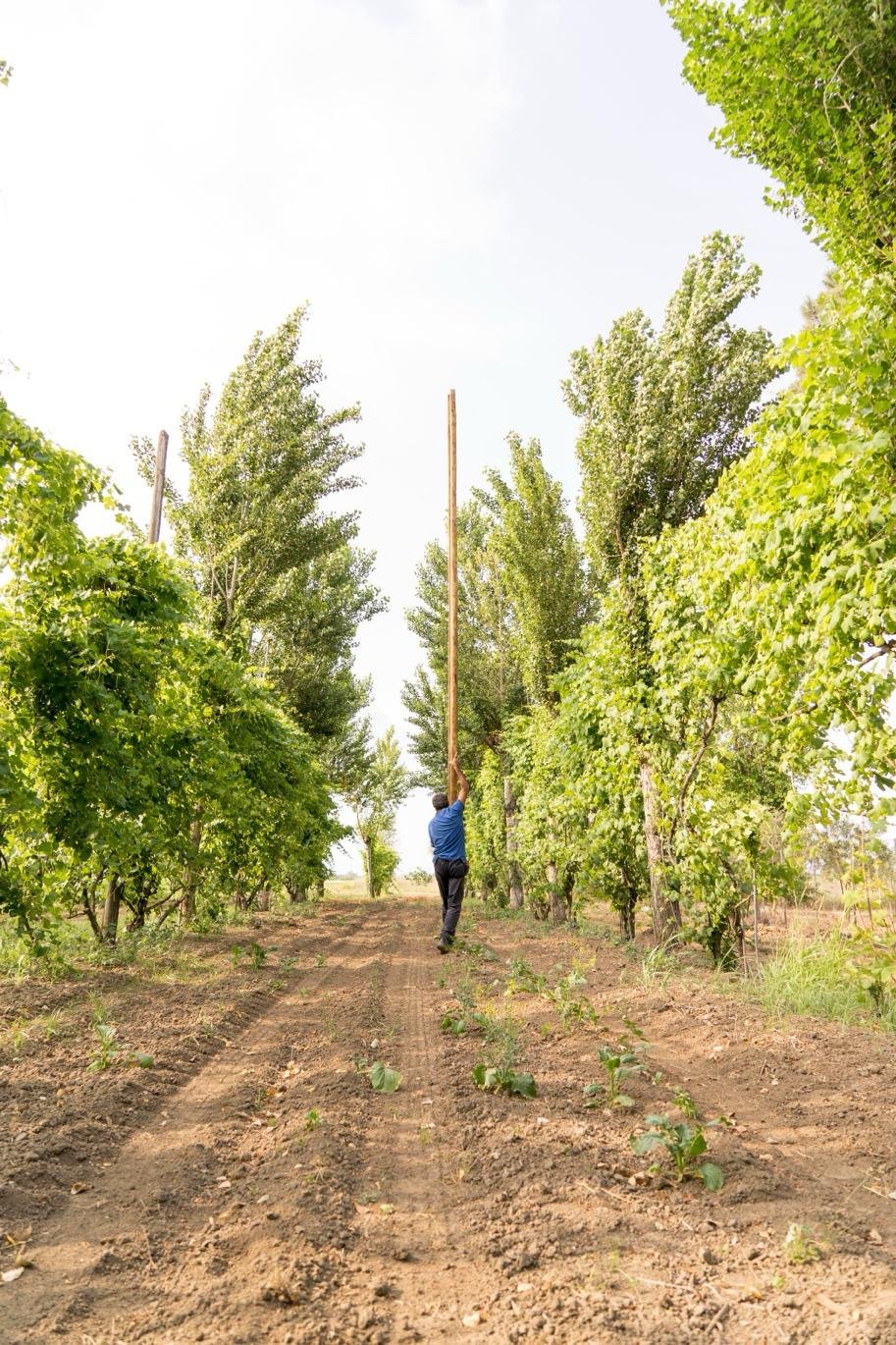
Asprinio d’Aversa - Vitematta
A wine defined by acidity
Working alongside Letizia on the technical and winemaking side is Gianluca Tommaselli, whose expertise has helped develop different expressions of Asprinio d’Aversa while respecting its distinctive local identity.
“The name Asprinio comes from the Italian aspro, meaning “sour” or “acidic”, a reference to the grape’s naturally sharp, high-acid character,” says Tommaselli. “Asprinio is renowned for its pronounced acidity and freshness — acidity that can be almost cutting on the palate — and these characteristics make it particularly suited to sparkling wine production. Vitematta describes the grape as fresh, lively and distinctly acidic, with citrus, green apple and floral notes.”
Among the wines produced by Vitematta are Pietra Bianca, an Asprinio IGT Terre del Volturno, and Radice Etrusca, an Asprinio Spumante DOC Aversa made by the Metodo Classico.
Pietra Bianca is a still white wine with fresh citrus aromas and the pronounced acidity and mineral character typical of Asprinio and the volcanic soils of its origin. Importantly, it is produced from grapes grown on land confiscated from organised crime. Radice Etrusca is the sparkling expression: pale yellow in colour, with fine and persistent bubbles, aromas of yeast and bread crust alongside the characteristic citrus and mineral notes of Asprinio, and a fresh, mineral finish.
Vitematta has also taken the extraordinary acidity and resilience of Asprinio in an experimental direction with Più o Meno Dieci, an underwater wine project developed with other producers of the Ager Asprinio group. The name refers to the journey from the vines growing around 10 metres above the ground to the wine being aged around 10 metres below sea level.
Since April 2024, † has been undergoing ageing on the seabed of the Underwater Archaeological Park of Baia, with another portion being aged in the traditional tufa caves of the Aversa DOC area. The project includes a limited production of 1,750 bottles aged at sea and a further 1,750 aged in the caves. The constant temperature, pressure and underwater environment are intended to influence the wine’s evolution, while retaining the lively acidity for which Asprinio is known.
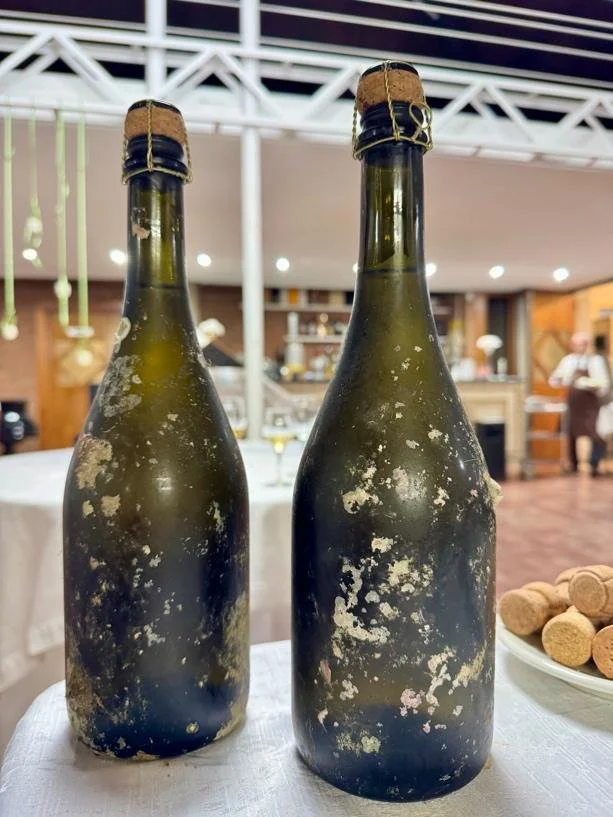
Asprinio in an experimental direction with Più o Meno Dieci
From confiscated land to social agriculture
But the story of Vitematta is not only about extraordinary vines and an ancient grape variety. It is also about what happens when land once controlled by organised crime is returned to productive use by the community.
Vitematta’s vineyards include two parcels of land in Casal di Principe confiscated from organised crime and entrusted in 2009 to Cooperativa Sociale Eureka Onlus. The official Agrorinasce documentation identifies the two plots as agricultural land confiscated from organised crime and subsequently assigned to Eureka, which established the Centro di Agricoltura Sociale Antonio Di Bona, named after a local farmer who was an innocent victim of the Camorra.
Today, these lands are cultivated rather than controlled by criminal interests, producing wine and employment while creating opportunities for people facing social and psychological difficulties. The Vitematta project is part of Eureka’s wider approach to social agriculture, using productive activity as a practical response to the needs of a difficult territory.
An important part of this wider social mission is the work of Pasquale Corvino, president of Cooperativa Sociale Agropoli Onlus. Agropoli has developed a broad programme of social inclusion and the recovery and productive use of confiscated property, including the NCO social restaurant in Casal di Principe.
Many of those supported by the Onlus are also trained to work in vineyards and cellars, learning practical skills and a trade that can give them greater independence and a route towards employment. The cooperative’s work extends beyond the vineyards to catering, tourism, training and other social enterprises, creating opportunities for people facing social and psychological difficulties to develop skills, rebuild confidence and take responsibility. (agropoli.coop)
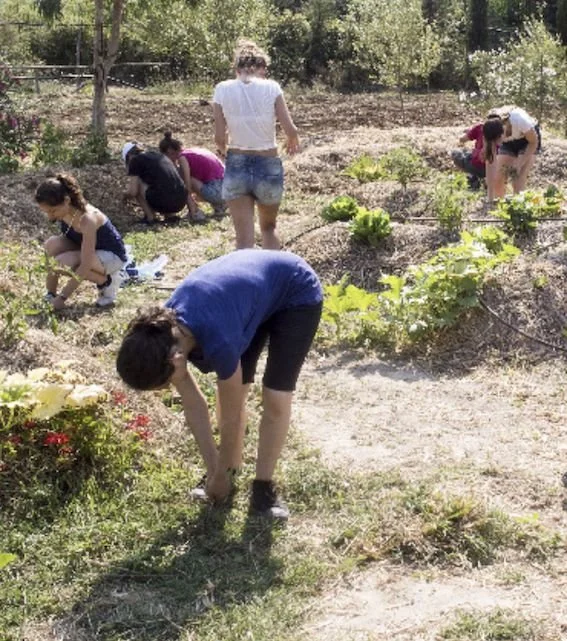
This is what makes the story particularly compelling: the work is not simply rehabilitation in theory. It is learning through daily tasks, teamwork and the shared production of something tangible. A vineyard, a cellar, a restaurant or a bottle of wine becomes part of a much larger process of rebuilding lives and returning value to a territory.
A different future for the land
It is difficult to think of a more powerful example of how viticulture can become an instrument of regeneration. Land once associated with the power of the Camorra and other criminal networks is now producing Asprinio d’Aversa, preserving an ancient farming tradition, protecting the genetic heritage of centuries-old vines and giving people a different future.
The story also brings together two very different kinds of heritage. There is the ancient heritage of the Alberata Aversana — the tall vines, the poplars, the hand harvesting and the extraordinary genetic material of the old plants — and there is the more recent history of a territory that has had to reclaim its land, its work and its identity from organised crime.
The work of those who fought organised crime — including members of the police and Carabinieri who helped challenge and dismantle the power of the Casalesi network and other criminal organisations — forms part of this wider story of liberation. Michele Scarpa’s account of his decades spent fighting the Camorra is a personal part of that wider story, and one we heard directly from him during our visit.
At Vitematta, the old vines are therefore more than an agricultural curiosity. They are living witnesses to the history of the Aversa area, while the vineyards themselves have become part of a very different chapter in that history.
The work is not complete when criminals are arrested; it is complete when the land, the work and the future are returned to its people.
Michèle Shah is a wine journalist, consultant, and Regional Ambassador for Italy at The Old Vine Conference.